
Our expert epileptologists and neurosurgeons at KD Hospital specialise in advanced epilepsy management. Leveraging state-of-the-art technology, we provide personalised treatment plans tailored to each patient's unique needs. Our multidisciplinary approach ensures accurate diagnosis and highly effective surgical interventions, delivering the best possible outcomes. For cutting-edge epilepsy surgery, trust KD Hospital—where expert care and innovative treatments offer hope, healing, and a brighter future.
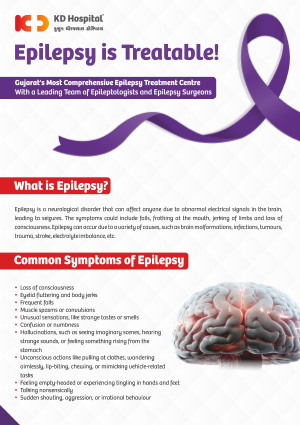
Epilepsy is the second most common and frequently encountered neurological condition that imposes a heavy burden on individuals, families, and also on healthcare systems. As per a recent study, 70 million people have epilepsy worldwide, and there are more than 12 million persons with epilepsy (PWE) in India, which contributes to nearly one-sixth of the global burden.
Epilepsy surgery is a procedure that targets and removes the specific area of the brain where seizures originate. It is most effective when seizures consistently arise from a single location. While epilepsy surgery is not typically the first line of treatment, it may be considered when at least two anti-seizure medications have not successfully controlled the seizures. This option offers hope for those without relief through other treatments.
Kids born with single/multiple epileptic focus suffer from a very high frequency of seizures, which can generally missed unless it is classic epilepsy. These kids are the least likely to benefit from any combination of medicines. Early surgery improves the quality of life and the child's cognitive and developmental outcomes. For children with "surgically remedial epilepsy", surgery should be offered as a procedure of choice rather than as a treatment of last resort. Even major resective surgeries can be done with minimal long-term deficits due to excellent brain plasticity, which is most remarkable up to five years of age. At KD Hospital, we have successfully done surgery for a 6-month-old child.
Once it has been established that the patient's seizures are not controllable, they undergo a series of investigations to establish the root cause. The epileptologist does a detailed study of video EEG, which has massive data of up to 100 hours or more. Each case is analysed in detail at weekly MDT (multidisciplinary team) meetings to assess the necessary feasibility, risk analysis and outcome prediction. Once the surgical plan is established, a series of meetings with the patient and family are held to discuss all the pros and cons of surgery and medical management. The patient undergoes surgery only if there is a mutual concussion between the family and the epilepsy team.
Epileptic seizures result from irregular activity of brain cells called neurons. The type of surgery needed depends on the location of the neurons that start the seizure and the age of the person having the surgery.
Types of surgery include:
Resective surgery is the most common epilepsy surgery. It involves removing a small portion of the brain. Under a microscope, the surgeon cuts out brain tissue from the area of the brain where seizures occur. This is usually the site of a tumour, brain injury, or malformation. Resective surgery is most commonly performed on one of the temporal lobes, which controls visual memory, language comprehension, and emotions.
Laser interstitial thermal therapy (LITT) is less invasive than resective surgeries. It uses a laser to pinpoint and destroy a small portion of brain tissue. Magnetic resonance imaging (MRI) guides the laser.
Deep brain stimulation (DBS) is a treatment option used for patients with drug-resistant epilepsy. In this procedure, a small device is implanted in the brain to deliver electrical impulses to targeted areas, helping to regulate abnormal brain activity that causes seizures. DBS is typically considered when other treatments, such as medications, have not been effective in controlling seizures. It can significantly reduce the frequency and intensity of seizures, improving the quality of life for many patients.
Corpus callosotomy is surgery to completely or partially split the part of the brain that connects nerves on the right and left sides. This part of the brain is called the corpus callosum. This surgery is usually used with children who experience irregular brain activity that spreads from one side of the brain to the other, leading to drop attacks.
Hemispherectomy is a procedure to remove one side of the damaged brain tissue called the cerebral cortex. This surgery is generally done only in children who experience seizures that originate from multiple sites in one hemisphere, usually the result of a condition present at birth or in early infancy.
Functional hemispherectomy is a procedure primarily used in children that precisely separates the abnormal and seizure-producing regions from their regular counterparts without actually removing the brain tissue.
Vagus nerve stimulation (VNS) device involves placing electrical lead wires around the vagus nerve in the neck. The vagus nerve starts in the lower area of your brain and travels down to your abdomen. A small, matchbox-sized pulse generator is implanted below the collarbone. The pulse generator sends mild electrical pulses to your brain to disrupt any abnormal bursts during a seizure. It benefits people who aren't candidates for other types of surgery or when the surgery didn't work.
A child should be referred for a specialist epilepsy surgery assessment when seizures continue despite adequate trials of two appropriately chosen and tolerated anti-seizure medicines. Referral should not wait until many more medicines have failed, and an obvious MRI abnormality is not required. The assessment checks whether surgery or another treatment could help, while considering the child’s development, learning and daily life. Referral does not mean that an operation has already been recommended.
Epilepsy surgery can be appropriate for selected children, but no operation is risk-free. The risks depend on the proposed procedure, the brain area involved and the child’s existing abilities. The team assesses possible effects on movement, vision, language and memory, alongside bleeding, infection and anaesthesia risks. Families should receive an individual explanation of the expected benefit, possible lasting difficulties and alternatives. Neither seizure freedom nor stopping medicines can be promised.
No. Every child with drug-resistant epilepsy deserves specialist assessment, but the recommendation may be further testing, continued medical treatment or a surgical option. For some children, the aim is seizure freedom; for others, a disconnection procedure may be considered to reduce dangerous falls or seizure severity. The multidisciplinary team (MDT) checks whether test findings agree and what can be treated safely. An MRI abnormality alone does not establish that removing it will control seizures.
The team reviews the seizure history, caregiver videos, previous medicine trials and the child’s development. Video EEG records seizures alongside brain electrical activity, and an epilepsy-protocol MRI assesses brain structure. Memory, learning, language and visual testing help establish a baseline and assess risk. PET or other specialised tests, including intracranial EEG in selected cases, may be needed. The MDT brings the results together; conflicting findings may require further review before a treatment decision.
Yes. KD Hospital in Ahmedabad offers epilepsy surgery assessment and treatment. The MDT reviews the seizure history, EEG and imaging together and considers any additional functional assessments needed. Surgery is offered when the expected benefit and individual risks support it. The family is involved in the decision and receives guidance on preparation, continuing medicines and follow-up.
Look for a neurosurgeon experienced in epilepsy surgery who works closely with an epileptologist and a multidisciplinary team. Ask how the team identifies the seizure-generating area, assesses risks to important brain functions and decides between surgery, further testing and other treatment. The discussion should cover realistic outcomes, possible complications and follow-up. A clear plan for medicines, seizure monitoring and recovery is an essential part of care.
MD (General Medicine), DM(Neurology), PDF Epilepsy
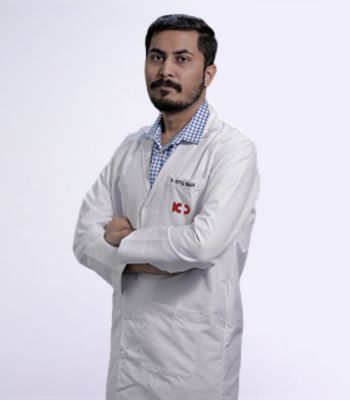
DM (Neurology), DNB (General Medicine), MNAMS, PDF Epilepsy
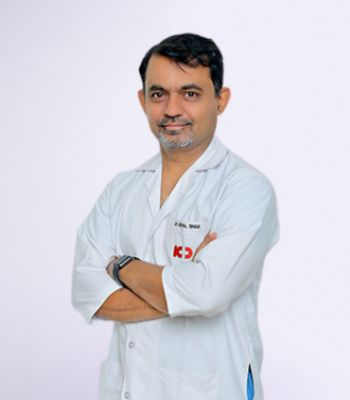
Senior Consultant Neurosurgeon