


By Dr Akshay Shah
Consultant, Neurology
October 15, 2026
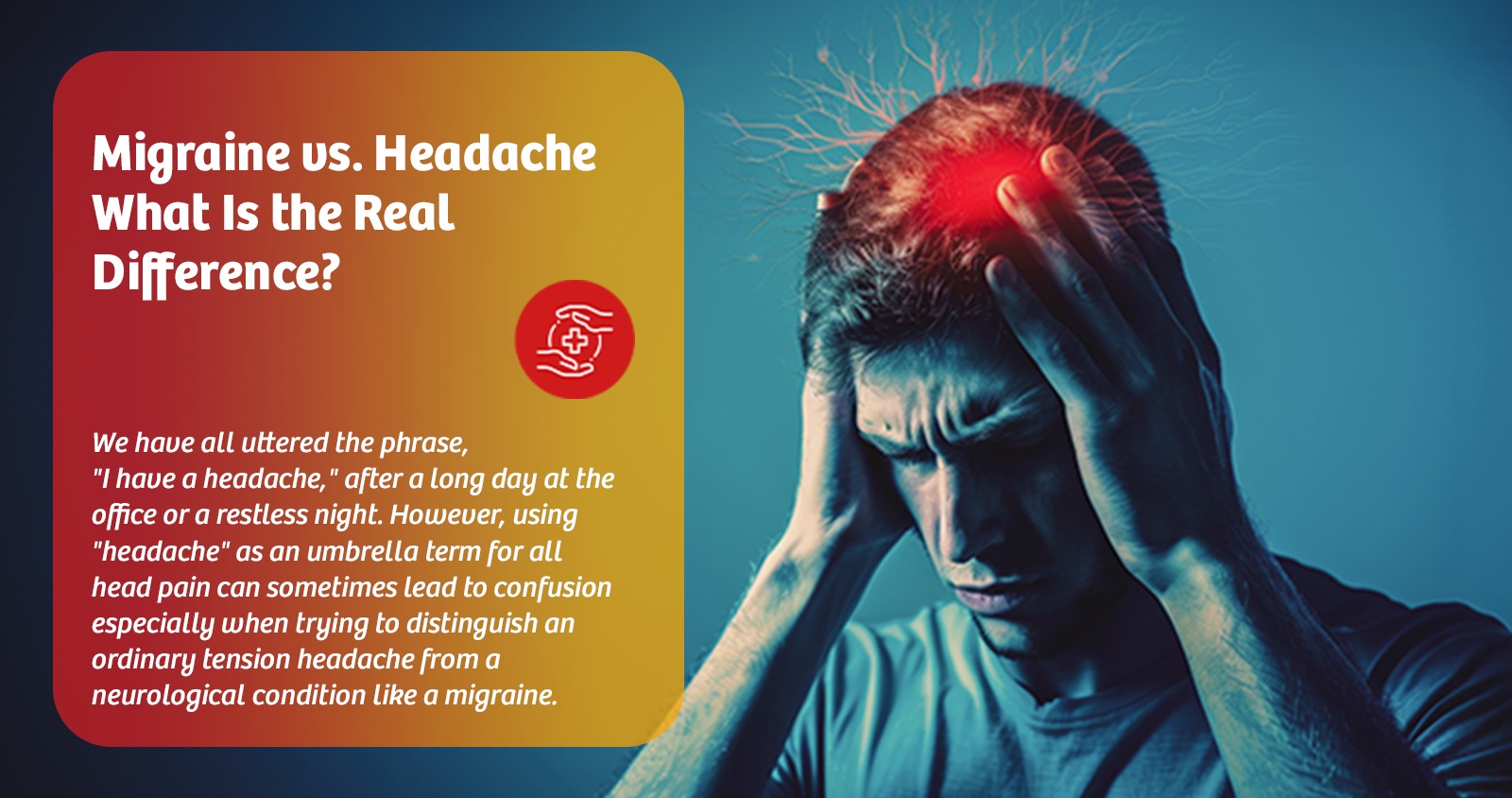
We have all uttered the phrase, "I have a headache," after a long day at the office or a restless night. However, using "headache" as an umbrella term for all head pain can sometimes lead to confusion—especially when trying to distinguish an ordinary tension headache from a neurological condition like a migraine.
Understanding the differences between the two is vital to ensure you receive the right diagnosis and effective treatment.
| Feature | Standard Tension Headache | Migraine |
|---|---|---|
| Pain Quality | Dull, aching, band-like pressure | Throbbing or pulsing pain that may be severe |
| Location | Usually felt on both sides of the head | Typically restricted to one side |
| Duration | 30 minutes to several hours | 4 to 72 hours if left untreated |
| Associated Symptoms | Mild sensitivity to light or noise | Severe nausea, vomiting, aura, and high sensitivity to light, sound, and smells |
| Impact on Activity | You can usually power through your day | Physical activity often worsens the pain, forcing bed rest |
Treating head pain effectively starts with knowing what you are dealing with:
Tension headaches:are most commonly triggered by muscle strain, poor posture, physical fatigue, or mental stress. They respond well to simple relaxation techniques, hydration, and standard analgesics.
Migraines: involve intricate neurological pathways, blood vessel changes, and brain chemicals like serotonin. Because of this, standard painkillers are often ineffective for severe migraines, which instead require targeted therapies designed to interrupt the neurological process.
While occasional headaches are a normal part of life, you should consult a healthcare professional immediately if you experience:
Is a migraine just a severe type of headache?
No. While a migraine does involve head pain, it is clinically classified as a complex neurological condition. It includes specific associated symptoms like nausea and sensory hypersensitivity that standard tension headaches do not feature.
Can physical activity make a migraine worse?
Yes, absolutely. Routine physical activities—such as walking, bending over, or climbing stairs—typically worsen migraine pain, whereas tension headaches do not usually stop you from carrying out everyday tasks.
Which painkillers work best for tension headaches versus migraines?
Tension headaches generally respond well to standard over-the-counter analgesics like paracetamol or ibuprofen. Migraines often require specialised prescription medications, such as triptans, which target the neurological pathways responsible for the attack.
When is a headache considered a medical emergency?
Seek urgent medical attention if you experience a "thunderclap" headache (a sudden, intensely severe pain that peaks within seconds), or if your head pain is accompanied by a high fever, stiff neck, slurred speech, confusion, or weakness on one side of the body.
