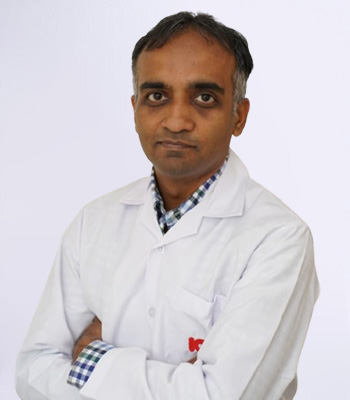

Post-Doctoral Fellowship in Clinical Neurophysiology – University of Southern California (USC), Los Angeles, USA (2014-2015)
Neurology Residency – University Medical Centre – South Campus, Tucson, Arizona, USA (2010-2014)
MBBS – Government Medical College, Bhavnagar (2002 -2008)
11+ years of experience.
Acute Stroke Care
Assessment and management of acute ischemic stroke, thrombolytic
therapy with Alteplase and Tenecteplase, and patient selection for
mechanical thrombectomy. Served as a stroke Director at Regional
medical center of San Jose
Clinical Neurophysiology and Epilepsy
EMG and nerve conduction studies.
Advanced evaluation and management of epilepsy, including expertise in
EEG, continuous ICU video-EEG, epilepsy monitoring, presurgical
evaluation and VNS programming.
Headache & Migraine
Management of complex headache disorders with advanced treatment
options including anti-CGRP therapies and Botulinum Toxin.
Neurodegenerative & Memory Disorders
Evaluation and management of neurodegenerative disorders, including
advanced dementia care and innovative anti-amyloid therapies.
Botulinum Toxin Therapy
Extensive experience in therapeutic Botulinum Toxin treatment for
chronic migraine, blepharospasm and severe spasticity.
General Neurology
Clinical evaluation and electrophysiological assessment of
neuromuscular conditions, movement disorders and management of
critically ill neurological patients and neurological emergencies.
Clinical Excellence Award Department of Medicine – Regional Medical Centre of San Jose, USA | 2024
Chief of Medicine Department - Regional medical centre of San Jose, USA |2019-2021
Chief Resident - Neurology Department - University of Arizona, USA| 2013-2014
Best Intern of the Year Award – University Physicians Healthcare Hospital | 2010–2011
First Rank, Preventive & Social Medicine – Government Medical College, Bhavnagar | 2005–2006
Winner, All Gujarat Psychiatric Quiz Competition – Bhavnagar | 2006
Winner, Undergraduate Western Zonal Quiz, Indian Psychiatric Society – Rajkot | 2006
Isolated Ipsilateral Hemiparesis From a Pyramidal Decussation Infarct: A Rare Case Confirmed by Magnetic Resonance Imaging. Cureus Journal of Medical Science | 2025. https://pmc.ncbi.nlm.nih.gov/articles/PMC12718626
Utility of Neurological Imaging in Sensory Variant of Chronic Inflammatory Demyelinating Polyneuropathy (CIDP): A Case Report. Journal of Clinical Neuromuscular Disease | 2017. https://pubmed.ncbi.nlm.nih.gov/28221307
Chronic Inflammatory Demyelinating Polyneuropathy Manifesting as Neuropathy with Liability to Pressure Palsies: A Case Report. Journal of Clinical Neuromuscular Disease | 2015. https://pubmed.ncbi.nlm.nih.gov/26583495
Meningioangiomatosis: A Rare Presentation with Progressive Cortical Blindness. Neurology | 2013. https://pubmed.ncbi.nlm.nih.gov/23897877
Sudden Deafness in a Patient with Long-Term Hemodialysis. American Journal of Kidney Diseases | 2013. DOI: 10.1053/j.ajkd.2012.06.029
Utility of CMR in Monitoring of Lung Transplant Recipients. Journal of Cardiovascular Magnetic Resonance | 2010. DOI:10.1186/1532-429X-12-S1-P143
American Academy of Neurology Annual Meetings (2013–2015) – 6+ primary poster presentations.
2nd International Conference on Heart & Brain | 2014 - poster presentation
University of Arizona GME Research Day – Awarded First Place | 2014.
Multiple Neurology Grand Rounds presentations on neurological disorders and clinical cases.
What are migraines and how can I tell the difference between tension headaches and migraines?
Migraines are a complex neurologic condition that causes frequent severe headaches that affect your day-to-day life and is usually accompanied by nausea, and sensitivity to light and sound. A standard tension headache usually feels like a dull, steady ache across both sides of the head.
Why do frequent headaches happen, and when should I see a neurologist?
Frequent headaches can be triggered by stress, lack of sleep, dehydration, or underlying neurological conditions like migraines. You should consult a specialist if your headaches are becoming more frequent, severe, or start interfering with your daily routine.
What is a seizure and what is epilepsy?
A seizure is an uncontrolled burst of electrical activity in the brain that typically causes muscle jerking, blank stares, or temporary loss of awareness lasting a few minutes. Epilepsy is a neurological disease that causes frequent seizures.
What should I do if someone experiences an epileptic seizure?
During a seizure, gently turn the person onto their side to keep their airway clear, and move any sharp or hard objects away from them. Never place anything in their mouth or try to hold them down tightly. Activate emergency care if the seizure does not stop within a couple of minutes or if this has happened the first time.
What is the main approach to managing epilepsy safely?
Epilepsy is primarily managed through consistent use of prescribed anti-seizure medications, regular neurologic follow-ups, and lifestyle adjustments. Following a structured care routine helps control seizures and allows patients to live a safe, active life.
What causes sudden dizziness or vertigo, and when is it a warning sign?
Vertigo and dizziness are often related to inner-ear issues, but they can sometimes indicate a stroke in the brain. Seek medical evaluation immediately if dizziness is persistent or comes with warning signs like face drooping, weakness or numbness on one side of the body, vision or speech difficulties.