


By Dr Akshay Shah
Consultant, Neurology
October 13, 2026
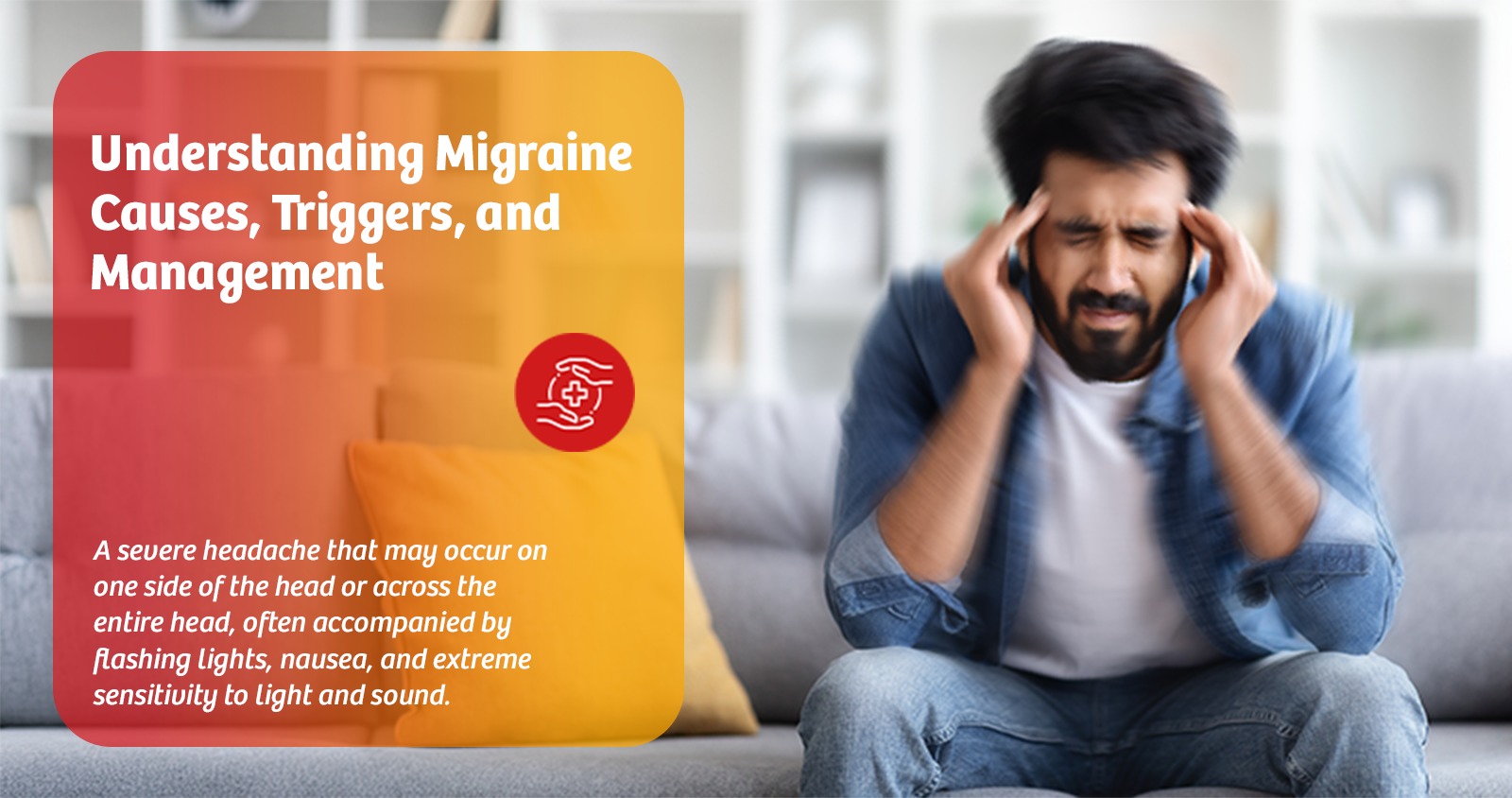
A severe headache that may occur on one side of the head or across the entire head, often accompanied by flashing lights, nausea, and extreme sensitivity to light and sound. It is more than an ordinary headache. For millions of people across the world, this is the daily reality of living with migraine.
Migraine is recognised as a complex neurological condition rather than simply a symptom. Migraine can significantly disrupt daily life, work, and personal wellbeing.
A migraine is a recurring type of headache that produces intense throbbing or pulsing pain. It has two main types:
While the exact biological cause of migraines is still being researched, medical experts have identified several common triggers that can set off an attack:
1. Stress and anxiety
High-pressure situations or the subsequent let-down period after stress ("let-down headaches").
2. Hormonal fluctuations
Changes in oestrogen levels, particularly around menstruation, pregnancy, or menopause.
3. Dietary factors
Skipping meals or water, dehydration, or consuming specific items like aged cheeses, red wine, chocolate, and excess caffeine.
4. Environmental stimuli
Bright flickering lights, loud noises, strong odours (like perfumes or cleaning products), and weather changes.
5. Sleep disruption
Getting too little—or even too much—sleep compared to your usual routine.
Effectively managing migraine usually requires a combination of lifestyle adjustments and medical treatments.
1. Identify and avoid triggers
Keep a detailed headache diary to track potential patterns in your diet, sleep, and stress levels.
2. Acute treatments
Over-the-counter painkillers (such as ibuprofen or paracetamol) can help if taken early, while prescription medications like triptans are specifically designed to stop a migraine in progress.
3. Preventive care
If you experience frequent or debilitating attacks, your doctor may recommend preventative treatments and lifestyle adjustments.
4. Create a calm environment
At the onset of an attack, rest in a quiet, darkened room with a cool compress on your forehead.
Can a migraine cause symptoms other than head pain?
Yes. Alongside throbbing head pain, a migraine frequently causes severe nausea, vomiting, dizziness, and an extreme sensitivity to light (photophobia), sound (phonophobia), and even smells.
How long does a typical migraine attack last?
If left untreated, a standard migraine attack can last anywhere from 4 to 72 hours. However, the exact time duration varies from person to person.
What is a migraine aura?
An aura consists of transient neurological disturbances that happen before the pain starts. This can include visual phenomena like zigzag lines, flashing lights, temporary blind spots, or a tingling sensation in the face and hands.
When should I see a doctor or neurologist about my migraines?
You should consult your GP if your migraines are frequent (occurring more than a couple of times a week), increasingly severe, unresponsive to over-the-counter remedies, or if they significantly interfere with your daily life.
