


By Dr Esha Patel
Consultant- Dentist at KD City Centre
March 16, 2026
We've all heard the usual suspects when it comes to tooth discolouration: coffee, red wine, cigarettes, and tea. And yes, they absolutely play a role. But if you've been cutting back on your morning latte and still notice your smile looking less-than-brilliant in photos, you're not imagining things.
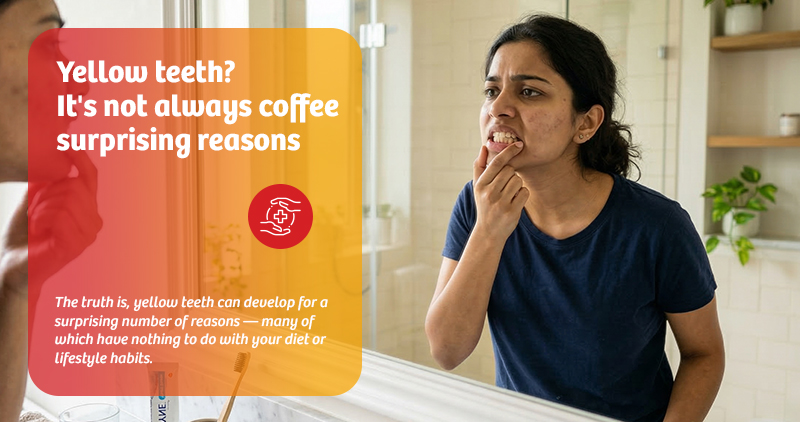
The truth is, yellow teeth can develop for a surprising number of reasons — many of which have nothing to do with your diet or lifestyle habits. Understanding the root cause of your tooth discolouration is the first step toward actually fixing it.
Let's dig into seven lesser-known culprits that could be dimming your smile.
1. Certain prescription medications
Here's something that often catches people off guard: some of the most commonly prescribed medications in the world can stain your teeth from the inside out.
Tetracycline antibiotics, when taken during childhood (or even when a pregnant mother takes them during pregnancy), can cause intrinsic staining — discolouration that originates within the tooth structure itself. This type of yellowing or gray-brown banding cannot be removed with whitening toothpaste because it's literally built into the tooth.
Other medications associated with tooth discolouration include antihistamines like cetirizine, blood pressure medications such as amlodipine, and antipsychotic drugs. These can cause surface staining over time by altering the composition of saliva or directly interacting with the enamel.
What to do: If you suspect medication is causing discolouration, speak with your dentist. Professional teeth whitening or cosmetic bonding may help improve the appearance of stained teeth; however, consult your prescribing doctor before making any changes to your medication.
2. Fluorosis: Too much of a good thing
Fluoride is essential for healthy teeth — but there is a tipping point. Dental fluorosis occurs when children consume excess fluoride during the years when their teeth are still developing (typically under the age of eight).
Mild fluorosis may appear as faint white spots or streaks on the teeth. More moderate to severe cases can cause yellow or brown discolouration, and in some cases, pitted enamel. The condition is irreversible once it develops, as it affects the tooth while it is forming beneath the gumline.
Common sources of excess fluoride include fluoridated drinking water, fluoride supplements, swallowing toothpaste, and naturally high fluoride levels in well water.
What to do: Fluorosis-related discolouration is best addressed through cosmetic dentistry — microabrasion, bleaching, or porcelain veneers, depending on severity.
3. Enamel erosion (Acidic foods and drinks)
Here's a counterintuitive one: acidic healthy foods — think citrus fruits, apple cider vinegar, sports drinks, and kombucha — can be a major driver of yellowing teeth. Acid doesn't stain teeth directly. Instead, it gradually wears away the outer enamel layer, revealing the naturally yellow dentin underneath. Unlike staining, this kind of yellowing is structural — the enamel is genuinely thinner, not just discoloured.
The irony is that many people who consume "clean" diets, rich in raw fruits, smoothies, and fermented foods, may be unwittingly accelerating this process.
Frequent sipping of acidic beverages throughout the day is especially damaging, as it keeps the mouth in a low-pH environment for extended periods.
What to do: Don't brush immediately after consuming acidic foods — wait at least 30 minutes. Rinse with water, use a straw for acidic drinks, and use fluoride toothpaste to help remineralise enamel.
4. Grinding your teeth (Bruxism)
Chronic teeth grinding — known as bruxism — is something millions of people do unconsciously, often while they sleep. Most people associate it with jaw pain, headaches, and chipped teeth. But bruxism can also cause significant tooth discolouration over time.
Here's how: the constant grinding and clenching wear down the enamel on the biting surfaces of the teeth. As the enamel thins, the yellowish dentin layer beneath becomes increasingly visible. The front teeth are usually the most affected, resulting in a noticeably duller and more yellow appearance at their edges.
What to do: If you grind at night, your dentist may recommend a custom nightguard to protect your enamel. Stress management techniques and physical therapy can also help reduce the frequency of grinding.
5. Genetics and natural tooth colour
Yellow teeth can sometimes be inherited and may not be related to habits or health conditions.
The natural colour of teeth is primarily influenced by the thickness of the enamel and the shade of the underlying dentin. Dentin has a natural yellow hue, and in individuals with thinner or more translucent enamel, this yellow colour can become more visible. Additionally, some people may genetically produce dentin that is darker or more intensely yellow.
It is also why teeth naturally yellow with age. As we get older, enamel gradually wears down and dentin thickens (the tooth's biological defence mechanism), making virtually everyone's teeth appear more yellow over time — regardless of diet or hygiene.
What to do: Professional whitening treatments are generally very effective for genetically yellow teeth, since the discolouration is surface-level or extrinsic.
6. Mouth breathing
Chronic mouth breathing — whether due to allergies, a deviated septum, sleep apnea, or habit — is an underrated cause of tooth discolouration that dentists frequently observe.
Breathing mainly through your mouth can lead to significant dryness in your mouth. Saliva is your mouth's natural defence system: it neutralises acids, washes away bacteria, remineralises enamel, and keeps the oral environment balanced.
Without adequate saliva flow, the protective mechanisms break down. Dry mouth (xerostomia) caused by mouth breathing leads to higher acidity in the oral environment, greater plaque accumulation, and weakened enamel — all of which contribute to yellowing and discolouration over time.
What to do: Address the underlying cause of mouth breathing with your doctor or an ENT specialist. In the meantime, staying well hydrated and using fluoride rinses can help support oral health when saliva production is reduced.
7. Using the wrong toothbrush or brushing too hard
Most people assume that brushing more vigorously means cleaner, whiter teeth. In reality, the opposite can be true. Brushing too aggressively — especially with a hard-bristled toothbrush — is one of the most common causes of enamel abrasion.
Over months and years, overly forceful brushing literally scrubs away the enamel, leaving teeth looking yellower and more sensitive. It can also push the gumline back, exposing the darker root surfaces of the teeth.
Similarly, highly abrasive toothpastes — including some marketed specifically as "whitening" formulas — can accelerate enamel wear when used too frequently or with too much pressure.
What to do: Switch to a soft-bristled toothbrush and use gentle, circular motions rather than aggressive scrubbing. Consider an electric toothbrush with a pressure sensor. Choose toothpastes with a Relative Dentin Abrasivity (RDA) score below 70 for daily use.
Yellow teeth aren't always the result of bad habits or poor hygiene. From the medications you take to the way you breathe at night, a surprising range of factors can affect the colour of your smile. The good news? Most causes are addressable once you know what you're dealing with.
If you've tried whitening products without success, it may be time to schedule a visit with your dentist to identify the true underlying cause. A targeted approach will always be more effective — and gentler on your enamel — than trial and error with over-the-counter products.
Your brightest smile starts with understanding what's really going on beneath the surface.
Always consult a qualified dental professional before starting any whitening treatment or if you notice sudden changes in tooth colour.
