

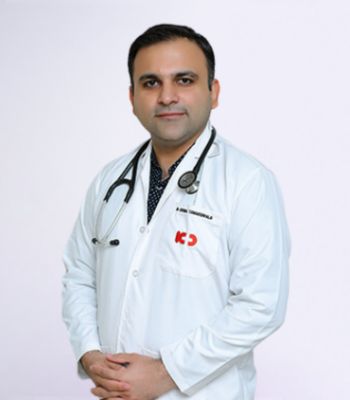
By Dr Krunal Tamakuwala
Consultant, Interventional Cardiology
September 28, 2026
Every year on September 29, the world pauses to talk about the heart.
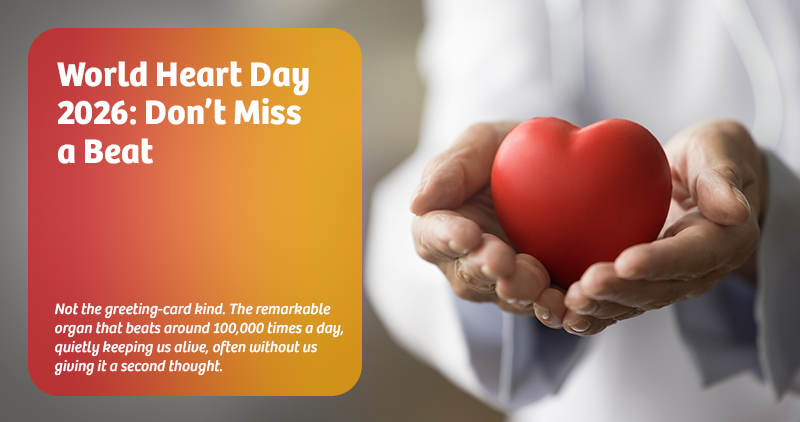
Not the greeting-card kind. The remarkable organ that beats around 100,000 times a day, quietly keeping us alive, often without us giving it a second thought.
This year, the World Heart Federation's message is simple and powerful: “Don’t Miss a Beat.” The 2026 campaign focuses on something that can make a real difference, recognising the signs and symptoms of cardiovascular disease before they are missed or dismissed.
Cardiovascular disease remains the world's leading cause of death, claiming more than 20 million lives every year. Many premature cardiovascular deaths can be prevented or delayed through better awareness, risk-factor control, early detection and timely treatment.
"Don't ignore your body's signals; recognise warning signs and take action early to prevent minor issues from becoming major problems."
Heart disease does not always announce itself dramatically.
We often imagine a heart attack as someone suddenly clutching their chest and collapsing. But the reality can be much quieter.
Symptoms may be mild, intermittent or gradually progressive. They may be attributed to stress, ageing, lack of sleep, or simply being out of shape.
Women may also experience symptoms that are not always recognised as cardiac—such as unusual fatigue, breathlessness, nausea or discomfort in the back, jaw or upper abdomen. This can sometimes contribute to delays in seeking care.
The World Heart Federation's 2026 campaign highlights three important messages: recognise the signs, protect your heart and demand action.
Don’t wait for the warning to become an emergency.
Some symptoms are familiar. Others are surprisingly easy to ignore.
Chest discomfort is the classic warning sign, but it does not always mean severe pain. It may feel like pressure, tightness, heaviness, burning or discomfort, particularly when it occurs with exertion.
Breathlessness deserves attention when it is new or worsening. If climbing stairs or walking a familiar distance suddenly leaves you unusually breathless, don't automatically assume it is simply ageing or lack of fitness.
Unusual fatigue can also be a warning sign, particularly when it is persistent or disproportionate to your activity.
Palpitations: A racing, pounding, irregular or “skipped” heartbeat, should not be ignored, especially when they are recurrent or associated with dizziness, breathlessness or chest discomfort.
Dizziness, fainting or near-fainting can sometimes indicate an abnormal heart rhythm or another cardiovascular problem and warrant evaluation.
Swelling in the feet, ankles, or legs may indicate fluid retention and can occur when the heart is not functioning properly.
Discomfort in the jaw, neck, back, shoulder, or arm can sometimes be related to the heart, especially when accompanied by chest discomfort, breathlessness, sweating, or nausea.
None of these symptoms automatically means that you have heart disease.
But if a symptom is new, recurrent, unexplained, occurs with exertion or appears together with other warning signs, it deserves attention.
One of the simplest ways to protect your heart is to know your cardiovascular risk.
Pay attention to:
You do not need to wait until you feel unwell to check these.
A simple health assessment can identify risk factors long before they become a heart attack, stroke or heart failure.
The encouraging news is that many cardiovascular risk factors can be prevented or effectively managed.
Move regularly. Walking, cycling, swimming, sports, or simply being physically active throughout the day all count. The World Heart Federation's 2026 campaign itself encourages people to build regular movement into daily life.
Eat for your heart. Increase vegetables, fruits, whole grains, legumes, nuts and healthier sources of fat. Reduce excess salt, highly processed foods and excessive sugar.
Don't smoke. If you smoke or use tobacco, quitting is one of the most important steps you can take for your cardiovascular health.
Maintain a healthy weight. Even modest, sustained improvements can positively influence blood pressure, diabetes and other cardiovascular risk factors.
Manage stress and sleep well. Mental wellbeing and adequate sleep are important parts of overall cardiovascular health.
And most importantly, know your risk and get checked, even when you feel perfectly well.
You don't have to wait for a dramatic event.
Consider a cardiovascular evaluation if you have recurrent or unexplained symptoms such as chest discomfort, breathlessness, palpitations, dizziness or unusual fatigue or if you have important risk factors such as hypertension, diabetes, high cholesterol, smoking, obesity or a family history of premature heart disease.
And if you develop persistent or severe chest discomfort, significant breathlessness, fainting, cold sweating, or symptoms suggestive of a heart attack, seek emergency medical care immediately.
At KD Hospital, Ahmedabad, our cardiology services range from preventive cardiovascular assessment and diagnostic evaluation to advanced interventional cardiology and comprehensive cardiac care.
This World Heart Day, Listen to Your Heart
The message this year is simple:
Don't Miss a Beat.
Don't ignore the breathlessness you've been explaining away.
Don't dismiss the fatigue that doesn't feel normal.
Don't wait for the chest discomfort to become unbearable.
Don't assume that because you're young, active or otherwise healthy, heart disease cannot affect you.
Your heart often gives you clues before it gives you a crisis.
Listen. Recognise. Check. Act.
Because sometimes, the most important heartbeat is the one we choose not to ignore.
