


By Dr Abhishek Gohel
Consultant Neurologist & Epileptologist
July 16, 2026
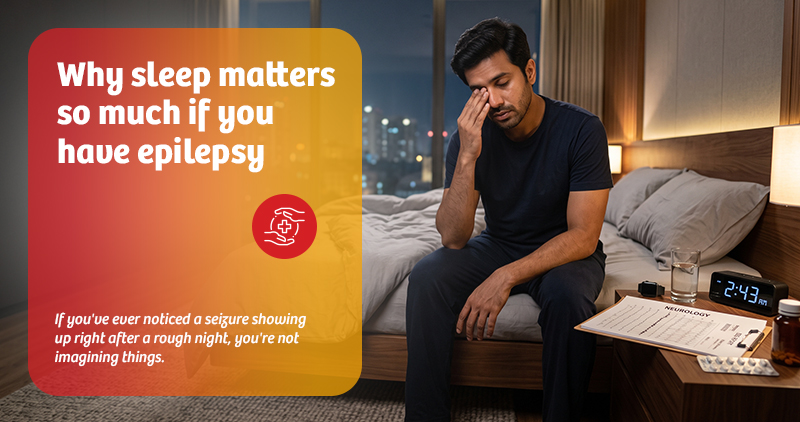
If you've ever noticed a seizure showing up right after a rough night, you're not imagining things. A missed night's sleep, a red-eye flight, a stretch of exam-week all-nighters, patients bring up this pattern again and again, often before a doctor ever mentions it to them. It's one of the most consistent triggers in epilepsy, and its worth understanding why.
The brain doesn't handle sleep loss well.
Nobody thinks clearly after a bad night; that's true for everyone. But in a brain that's already prone to seizures, sleep deprivation does something more specific: it lowers the seizure threshold. The electrical stability that normally keeps things in check gets shakier, attention and excitability shift, and abnormal firing becomes easier to trigger.
This is why sleep isn't just a "take care of yourself" afterthought in epilepsy care;it's part of the actual treatment plan, right alongside medication. Some seizure syndromes are especially sensitive to sleep loss, and plenty of patients notice their seizures cluster around specific moments: right after they wake up, following a string of late nights, or whenever their routine gets disrupted.
A few familiar culprits show up again and again:
Here's the frustrating part: even when a medication is doing its job perfectly well, poor sleep can still slip a seizure through.
It works in both directions.
Sleep and seizures don't just interact one way. Seizures that happen at night or the anxiety of worrying that one might have can wreck sleep quality on their own. Some sedating medications add to the problem, too. So you end up with a loop: bad sleep makes seizures more likely, and seizures (or the fear of them) make sleep worse, which then feeds back into more seizures.
There's also evidence that seizure activity and unusual EEG patterns tend to cluster around sleep transitions - falling asleep, waking up, which is another reason clinician pay close attention to sleep timing specifically, not just total hours.
Not always. When someone with epilepsy keeps struggling with sleep, a few other things are worth ruling out:
None of these should be guessed at. If sleep problems are sticking around, they're worth bringing to a doctor rather than assuming they'll sort themselves out.
Some people are at higher risk when sleep gets disrupted:
None of this is glamorous, but it's the stuff that consistently makes a difference:
A few things are worth flagging clearly:
Bring it up with a doctor if:
Any new sleep disturbance, unusual daytime fatigue, loud snoring, suspected sleep apnea, or seizures that seem to be getting worse deserves a conversation with a neurologist. Sleep disorders show up often in people with epilepsy, and left unaddressed, they can chip away at seizure control.
In any of these situations, call local emergency services (108) or get to urgent care right away.
Poor sleep and seizures are connected far more often than people assume, that link shouldn't be dismissed.
Sleep issues deserve more than general lifestyle advice when it's a first seizure, night-time events are new, medication side effects are significant, or sleep deprivation keeps exposing gaps in seizure control. At that point, an epilepsy specialist may recommend an EEG, video EEG monitoring, or a medication adjustment; generic sleep tips alone won't cut it.
Can lack of sleep actually trigger a seizure?
Yes, it's one of the most well-established triggers in epilepsy. Even with medication working properly, repeated late nights, travel disruption, shift work, or broken-up sleep can be enough to bring on a breakthrough seizure.
Why does sleep loss matter so much specifically in epilepsy?
Because it lowers the seizure threshold. In plain terms, the brain becomes less electrically stable, so it takes less to set off abnormal activity.
Can seizures at night make someone tired all day?
Yes. Nocturnal seizures fragment sleep and cut into the recovery it's supposed to provide, which shows up the next day as fatigue or trouble concentrating. Some people assume they're just "not sleeping well" when the actual cause is undiagnosed nighttime seizure activity.
Does sleep apnea play a role in epilepsy?
It can. Untreated apnea, snoring, choking during sleep, waking up exhausted, and excessive daytime sleepiness have been linked to worse seizure control in some patients.
Should someone adjust their own seizure or sleep medication?
No. Cutting back on antiseizure medication because of drowsiness, or starting sleep medication on your own, isn't something to do without medical input; both can affect seizure control and safety.
When does this need urgent attention?
If seizures worsen after poor sleep, new night-time events appear, daytime sleepiness becomes severe, sleep apnea is suspected, or a medication is causing serious sleep problems, it's time to get it reviewed. True emergencies, prolonged seizures, repeated seizures without recovery, breathing trouble, injury, or a first seizure need immediate medical attention.