


Whatsapp

Urinary incontinence: Types and how to treat them

Urinary incontinence: Types and how to treat them

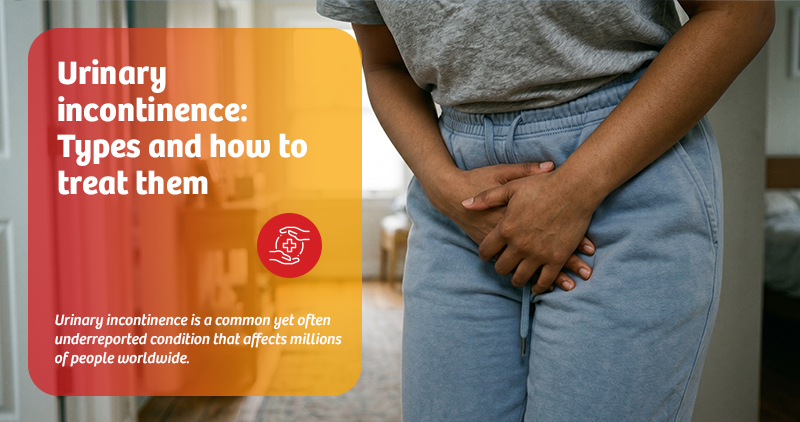
Urinary incontinence is a common yet often underreported condition that affects millions of people worldwide. Despite its prevalence, many individuals hesitate to seek help due to embarrassment or the misconception that it is a normal part of ageing. In reality, urinary incontinence is a medical condition that can be effectively managed, and in many cases, treated.

What is urinary incontinence?

Urinary incontinence refers to the involuntary leakage of urine. It occurs when there is a loss of bladder control, which can range from occasional minor leaks to a complete inability to control urination.

Types of urinary incontinence

  • Stress incontinence: Leakage during coughing, sneezing, laughing, or exercise.
  • Urge incontinence: Sudden, intense urge to urinate followed by leakage.
  • Overflow incontinence: Frequent dribbling due to incomplete bladder emptying.
  • Mixed incontinence: A combination of stress and urge incontinence.

Causes of urinary incontinence

  • Weak pelvic floor muscles
  • Ageing
  • Pregnancy and childbirth
  • Menopause
  • Prostate issues in men
  • Neurological conditions
  • Lifestyle factors like obesity, smoking, and alcohol
  • Chronic conditions such as diabetes

Diagnosis

  • Medical history
  • Physical examination
  • Urine tests
  • Bladder diary
  • Imaging or urodynamic tests

Treatment options

  • Lifestyle modifications
    Weight management, fluid control, and avoiding caffeine and alcohol.
  • Pelvic floor exercises
    Strengthening muscles to improve control.
  • Bladder training
    Scheduled urination to improve bladder capacity.
  • Medications
    To relax the bladder or control urgency.

Minimally invasive treatments

Botox injections or nerve stimulation.

Surgical options

Slings, bladder support procedures, and artificial sphincters.

Prevention

  • Regular exercise
  • Healthy weight
  • Avoid bladder irritants
  • Treat infections early

When to see a doctor

If symptoms persist, worsen, or affect quality of life.

FAQs

1. Is it normal with ageing?

No, it is treatable.

2. Can it be cured?

Many cases improve significantly.

3. Are exercises effective?

Yes, especially for stress incontinence.

4. Should I drink less water?

No, balanced hydration is important.

5. When is surgery needed?

In severe or unresponsive cases.