


By Dr Maitreyi Raj Patel
Consultant Dermatologist
March 18, 2026
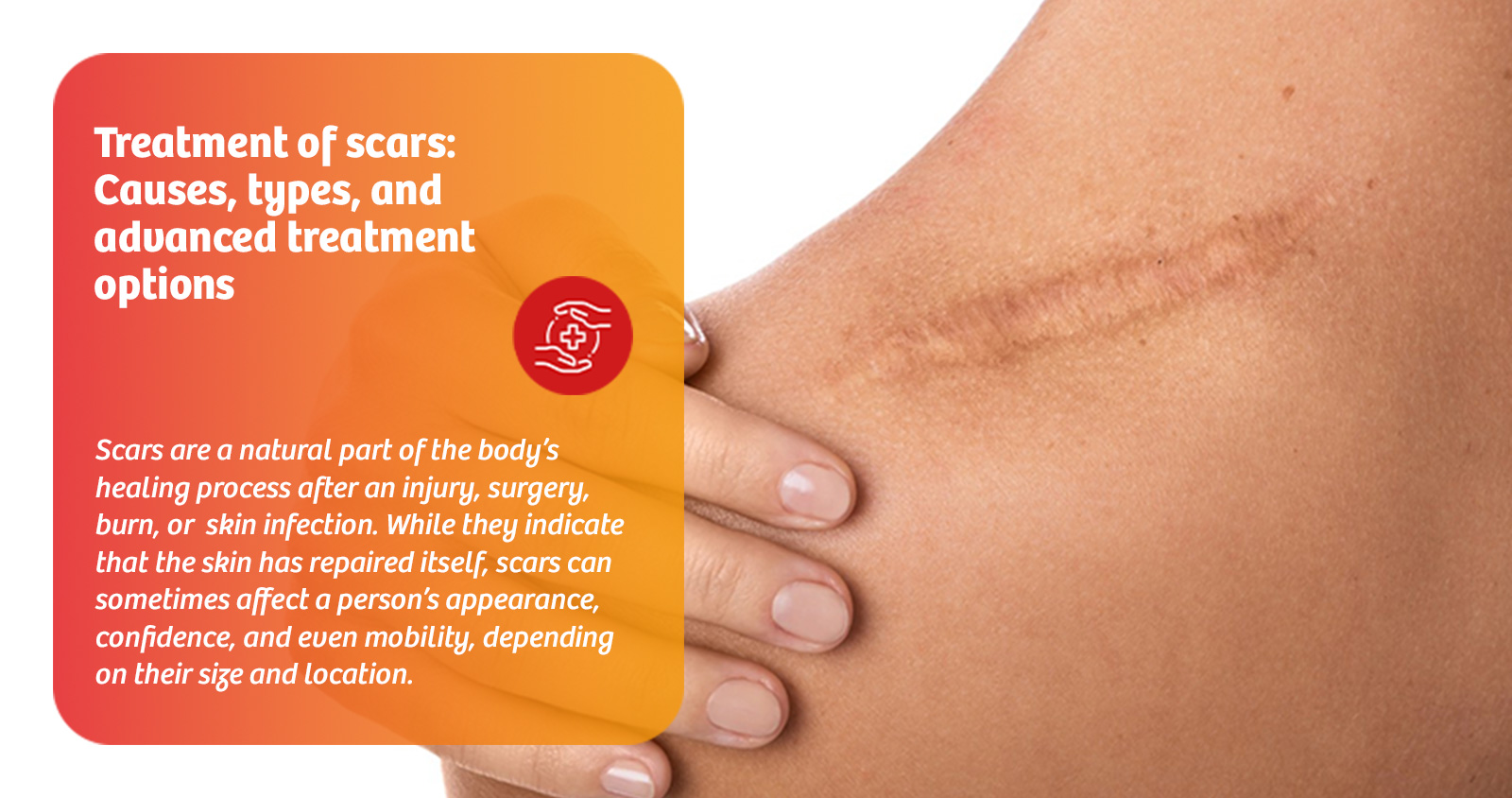
Scars are a natural part of the body’s healing process after an injury, surgery, burn, or skin infection. While they indicate that the skin has repaired itself, scars can sometimes affect a person’s appearance, confidence, and even mobility, depending on their size and location.
Fortunately, modern dermatology offers several effective treatments that can significantly improve the appearance of scars and restore smoother skin.
At KD Hospital, experienced dermatologists use advanced diagnostic techniques and modern treatment technologies to help patients safely and effectively manage and reduce scars.
A scar forms when the skin repairs itself after damage to the deeper layers of the skin. When the skin is injured, the body produces collagen fibres to heal the wound. These fibres are often arranged differently from normal skin tissue, creating a visible mark known as a scar.
Scars may appear raised, sunken, discoloured, or thick, depending on the cause of the injury and how the skin heals. While some scars gradually fade over time, others may remain noticeable for years without treatment.
Scars can develop for various reasons, and understanding the causes helps determine the most effective treatment approaches.
1. Acne
Acne scars are among the most common types of facial scars. Severe or inflamed acne can damage the skin tissue, leaving behind depressions or dark marks.
2. Surgical procedures
Any surgical incision can leave a scar. Although surgeons aim to minimise visible scarring, the healing process may still lead to noticeable marks, depending on the patient’s skin type and healing pattern.
3. Injuries and cuts
Deep cuts, accidents, or trauma can damage multiple layers of the skin, resulting in scars once the wound heals.
4. Burns
Burn injuries can cause extensive damage to the skin and often lead to thick, raised scars that may require specialised treatment.
5. Infections
Certain infections, such as chickenpox or skin infections, can leave behind permanent marks or scars.
Different types of scars require different treatment approaches. Some of the most common types include
1. Atrophic scars
These scars appear as depressions in the skin and are often caused by acne or chickenpox. They occur when the skin fails to produce sufficient collagen during the healing process.
2. Hypertrophic scars
Hypertrophic scars are raised scars that remain within the boundary of the original wound. The body produces collagen during the healing process.
3. Keloid scars
Keloids are thick, raised scars that extend beyond the injury site. They can continue growing over time and may cause discomfort or itching.
4. Contracture scars
These scars, commonly caused by burns, can tighten the skin and may restrict movement, especially when they form near joints.
5. Stretch marks
Stretch marks are scars that form when the skin stretches quickly due to pregnancy, growth spurts, or fluctuations in weight.
While many scars fade naturally over time, some require medical attention. You should consider consulting a dermatologist if
Early treatment can often produce better results and prevent scars from becoming more prominent.
Modern dermatology offers several effective treatments to improve the appearance of scars. The choice of treatment depends on the type, size, location, and age of the scar.
1. Laser therapy
Laser treatment is one of the most advanced and effective methods for reducing it. It works by stimulating collagen production and improving skin texture. Laser therapy can help reduce redness, flatten raised scars, and improve the appearance of acne scars.
2. Microneedling
Microneedling is a minimally invasive procedure that uses tiny needles to create controlled micro-injuries in the skin. The procedure activates the body’s natural healing mechanisms and promotes collagen production, improving skin texture and minimising the appearance of scars.
3. Chemical peels
Chemical peels use specially formulated solutions to remove the top layer of damaged skin. This treatment helps reduce superficial scars, acne marks, and uneven skin tone.
4. Dermal fillers
Dermal fillers can be used to treat depressed scars by lifting the skin to match the surrounding tissue. This treatment is commonly used for certain types of acne scars.
5. Steroid injections
Steroid injections are often used to treat hypertrophic and keloid scars. These injections help reduce inflammation, flatten the scar, and relieve discomfort.
6. Surgical scar revision
In some cases, minor surgical procedures may be performed to improve the appearance of scars. Scar revision surgery can reposition or reduce the size of a scar to make it less noticeable and more aesthetically pleasing.
7. Topical treatments
Dermatologists may also recommend medicated creams, silicone gels, or other topical treatments to soften scars and improve their appearance over time.
While not all scars can be prevented, proper wound care can significantly reduce the chances of severe scarring.
Early treatment can greatly impact the development of a scar.
Every scar is different, and effective treatment requires a personalised approach. At KD Hospital, dermatology specialists evaluate each patient’s skin type, scar type, and medical history before recommending a treatment plan.
With access to modern dermatological technologies and experienced specialists, patients can benefit from safe and effective solutions designed to improve skin texture and restore confidence.
Scars are a natural part of the healing process, but they do not have to serve as permanent reminders of injuries or skin conditions. With advancements in dermatology, a wide range of treatments can significantly reduce the appearance of scars and improve overall skin health.
If you are concerned about scars or looking for effective treatment options, consulting a qualified dermatologist can help you choose the most suitable approach for your skin.
Professional guidance, early intervention, and the right treatment plan can make a meaningful difference in achieving smoother, healthier-looking skin.
