


By Dr Vishal Modh
Consultant Laparoscopic, Robotic General Surgeon
Jan 31, 2026
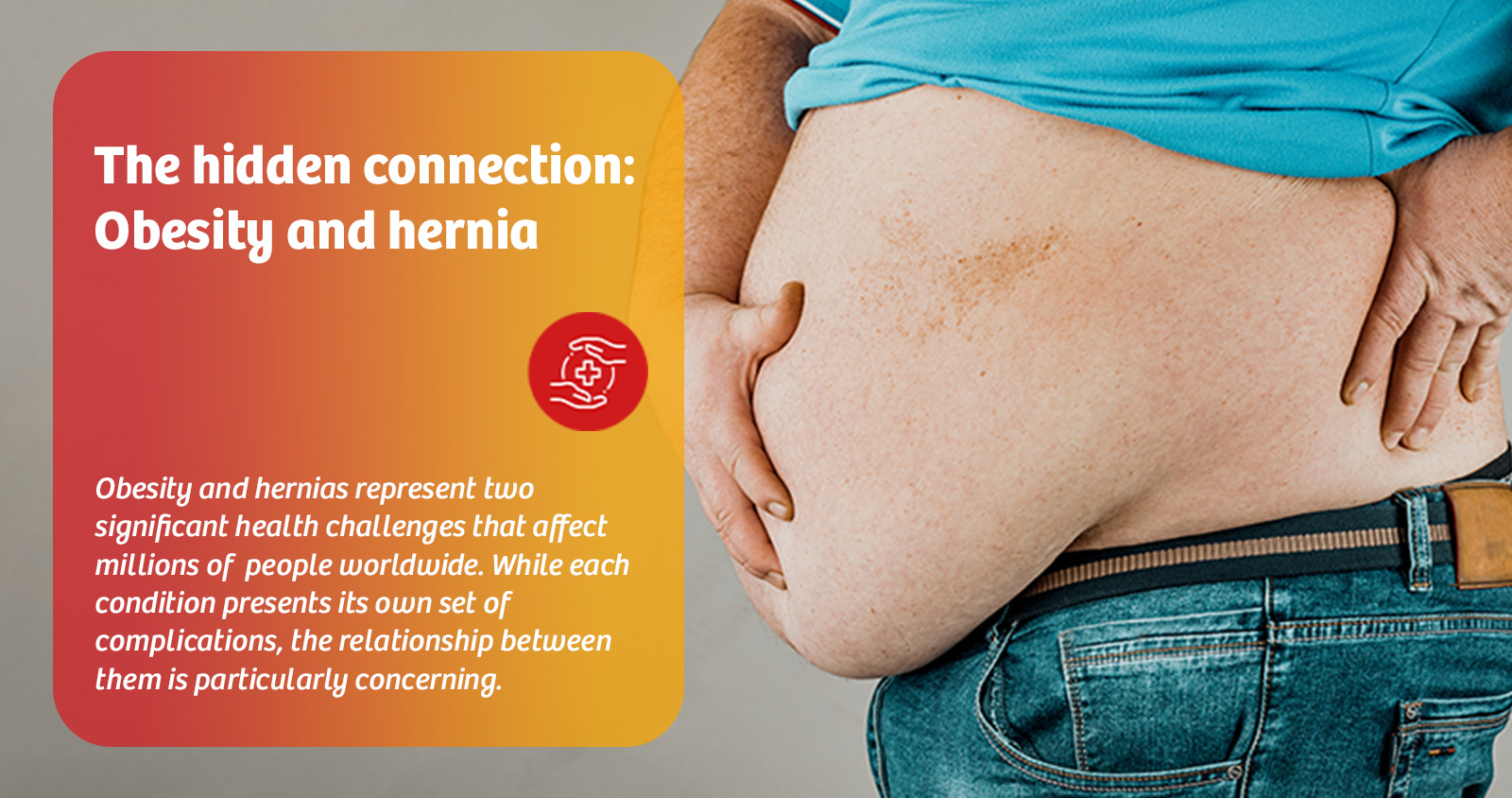
Obesity and hernias represent two significant health challenges that affect millions of people worldwide. While each condition presents its own set of complications, the relationship between them is particularly concerning. Understanding how excess weight contributes to hernia development, complicates treatment, and affects recovery is crucial for anyone struggling with obesity or at risk of developing a hernia.
A hernia occurs when an organ or tissue pushes through a weak spot in the surrounding muscle or connective tissue. Think of it like a tyre with a weak spot in its wall—when pressure builds up inside, the inner tube can bulge through that weakness. In the human body, this typically happens in the abdominal wall, creating a visible bulge that may be accompanied by pain or discomfort.
The most common types include inguinal hernias (in the groin area), umbilical hernias (around the belly button), hiatal hernias (where the stomach pushes through the diaphragm), and incisional hernias (occurring at the site of previous surgical incisions). Each type presents unique challenges, but all share one common risk factor: increased intra-abdominal pressure.
Obesity has reached epidemic proportions worldwide, with rates tripling since 1975. Defined as a body mass index (BMI) of 30 or higher, obesity is far more than a cosmetic concern—it is a complex medical condition. Obesity significantly increases the risk of heart disease, diabetes, certain cancers, and hernias. Excess body weight triggers a cascade of physiological changes that affect nearly every system in the body, placing particular strain on the abdominal wall.
The connection between obesity and hernias is multifaceted. Excess body weight dramatically increases intra-abdominal pressure. Every time an obese person moves, coughs, or even breathes, their abdominal wall experiences greater force than that of someone at a healthy weight. This constant, elevated pressure seeks out any weakness in the abdominal wall and exploits it.
Additionally, obesity often comes with chronic conditions that further elevate hernia risk. Many obese individuals suffer from chronic coughing due to respiratory issues, constipation from poor diet and limited mobility, and difficulty with physical exertion—all activities that spike abdominal pressure.
The quality of the abdominal wall tissue itself may also be compromised in obese individuals. Research suggests that obesity can affect collagen metabolism and the structural integrity of connective tissues, making the abdominal wall inherently weaker and more susceptible to herniation.
When an obese individual develops a hernia, treatment becomes significantly more complicated. Surgical repair carries increased risks when performed on obese patients. Excess adipose tissue makes it harder for surgeons to visualise the hernia, access the defect, and achieve adequate repair. The surgery requires more time, which increases the risks associated with anaesthesia.
Obese patients face higher rates of surgical complications, including infection, poor wound healing, blood clots, and cardiovascular events. Perhaps most frustratingly, recurrence rates are substantially higher in obese patients. Even after successful surgical repair, the ongoing elevated intra-abdominal pressure means the hernia is more likely to return—sometimes at double or triple the rate seen in patients with normal BMI.
Many surgeons now recommend or require that patients lose weight before undergoing elective hernia repair. While challenging, the improved surgical outcomes and reduced recurrence rates make it worthwhile.
Obesity and hernias often create a challenging cycle that is difficult to break. Excess weight increases the risk of developing a hernia, which can cause pain and limit mobility. Reduced physical activity then leads to further weight gain, increasing the size of the hernia and worsening symptoms. As discomfort grows, activity levels decrease even more, allowing the cycle to continue.
This challenge also extends into treatment and recovery. Post-treatment or post-surgical recovery often requires limited activity, which may contribute to additional weight gain. If obesity is not effectively addressed, the risk of hernia recurrence remains high, potentially restarting the entire cycle.
Breaking the connection requires a comprehensive approach focused on weight management and reducing abdominal pressure. Achieving and maintaining a healthy weight is the single most effective prevention strategy. Even modest weight loss, of 5-10% of body weight, can significantly reduce intra-abdominal pressure and the risk of hernia.
Proper lifting techniques are essential, including bending at the knees, keeping the back straight, and avoiding twisting motions. Core strengthening exercises, done under proper guidance, can help support the abdominal wall. Managing chronic cough, addressing constipation through dietary fibre and hydration, and avoiding straining during bowel movements all help minimise abdominal pressure spikes.
For those struggling with both obesity and hernias, the path forward requires patience and a multidisciplinary approach. Working with healthcare providers, including primary care physicians, surgeons, and dietitians, creates the best framework for success.
Weight loss before hernia surgery offers the best outcomes. Programs combining dietary changes, increased physical activity, behavioural modification, and sometimes medical intervention can help patients achieve the necessary weight loss for safer surgery and better long-term results. After repair, it is essential to maintain weight loss through ongoing lifestyle changes rather than relying on temporary diets to prevent recurrence.
The relationship between obesity and hernias represents a significant yet manageable health challenge. At KD Hospital, our specialised team of surgeons, physicians collaborates to help patients understand how excess weight contributes to hernia development and impacts treatment outcomes. Managing weight proactively can lower the risk of hernias and promote long-term health and well-being.
