


By Dr Darshil Shah
Consultant Urology
April 20, 2026
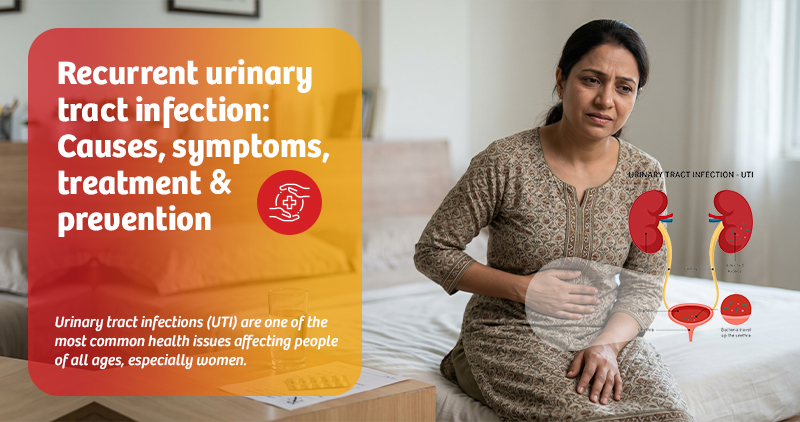
Urinary tract infections (UTI) are one of the most common health issues affecting people of all ages, especially women. While a single urinary tract infection can usually be treated easily, recurrent urinary tract infections can become a persistent and distressing problem if not properly addressed.
If you are experiencing recurrent urinary infections, it is crucial to identify the underlying causes and seek expert medical care. At KD Hospital, advanced diagnostics and specialised urology care are designed to provide accurate treatment and long-term relief.
A recurrent urinary tract infection is defined as
These infections can affect different parts of the urinary system, including
Recurrent infections may be due to reinfection or persistence of bacteria despite treatment.
A combination of medical and lifestyle factors usually causes recurrent Urinary Tract Infections.
1. Bacterial reinfection
The most common cause is reinfection by bacteria such as E. coli, which can re-enter the urinary tract.
2. Incomplete treatment
Stopping antibiotics early or administering improper treatment may leave bacteria behind, leading to recurrence.
3. Anatomical abnormalities
Structural issues in the urinary tract can prevent complete emptying of urine, allowing bacteria to grow.
4. Kidney stones
Stones can act as a reservoir for bacteria, leading to repeated infections.
5. Hormonal changes
Postmenopausal women are at higher risk due to reduced estrogen levels.
6. Diabetes
High blood sugar levels promote bacterial growth and weaken immunity.
7. Poor hygiene or lifestyle habits
Poor hygiene, inadequate hydration, and prolonged urine retention increase the risk.
8. Urinary incontinence and urethral strictures
Conditions like urinary incontinence and urethral strictures can disrupt normal urine flow and bladder emptying, increasing the risk of recurrent infections.
Certain groups are more prone to recurrent urinary tract infections
Recognising symptoms early can prevent complications.
Common symptoms
If these symptoms keep returning, do not ignore them.
At KD Hospital, a comprehensive evaluation is done to identify the root cause.
Accurate diagnosis ensures targeted treatment and prevents recurrence.
Treatment is individualised depending on the severity and underlying cause.
1. Antibiotic therapy
2. Prophylactic antibiotics
3. Treatment of underlying conditions
4. Lifestyle modifications
5. Advanced urology care
At KD Hospital, patients benefit from
Preventive strategies play a crucial role in preventing recurrence.
Daily habits to follow
Special tips for women
For diabetic patients
Ignoring recurrent infections can lead to serious health issues
Early treatment is essential to avoid these complications.
Seek medical attention if
Timely intervention at a specialised centre like KD Hospital can prevent long-term complications.
KD Hospital offers comprehensive and advanced care for urinary tract conditions
Recurrent urinary tract infections can significantly affect your daily life, but they are manageable with the right approach. Identifying the root cause, following preventive measures, and seeking expert care are key to long-term relief.
If you or your loved ones are experiencing recurrent urinary infections, don't hesitate to seek consultation. Early intervention ensures better outcomes and improved quality of life.
Q1. Can recurrent urinary tract infections be cured permanently?
Yes, with proper diagnosis and treatment of the underlying cause, recurrence can be significantly reduced or prevented.
Q2. How can I stop getting urinary tract infections repeatedly?
Hydration, hygiene, lifestyle changes, and medical evaluation are essential.
Q3. Are recurrent urinary tract infections common in women?
Yes, due to anatomical factors, women are more prone.
Q4. Does drinking water help prevent urinary tract infections?
Yes, it helps flush bacteria from the urinary tract.
Q5. Can men get recurrent urinary tract infections?
Yes, often related to prostate issues or urinary obstruction.
