

By Dr Kush Shah
Consultant Surgical Oncologist & Robotic Surgeon
Feb 09, 2026
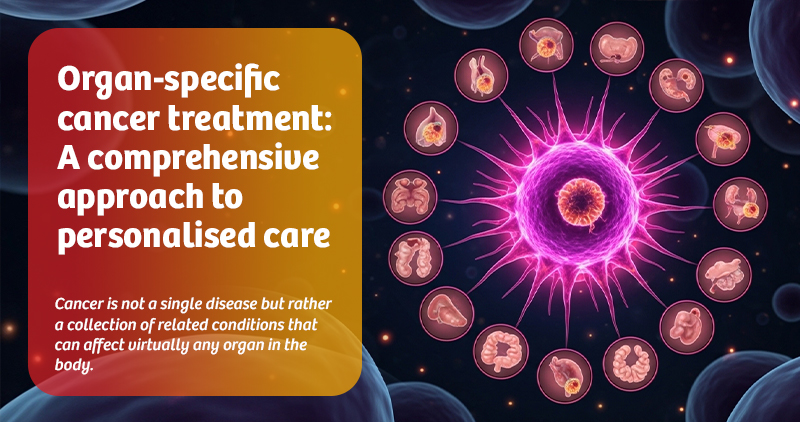
Cancer is not a single disease but rather a collection of related conditions that can affect virtually any organ in the body. At KD Hospital, we understand that each cancer type presents unique challenges and requires specialised treatment approaches tailored to the specific organ affected. Our commitment to organ-specific cancer treatment ensures that every patient receives the most precise, effective, and personalised care possible.
Organ-specific cancer treatment represents a paradigm shift in oncology, moving away from one-size-fits-all approaches toward highly specialised protocols designed for each type of cancer. Different organs have distinct biological characteristics, cellular structures, and functional requirements, which means that breast cancer behaves differently from lung cancer, which differs from colorectal cancer, and so on. This fundamental understanding drives our treatment philosophy at KD Hospital.
When cancer develops in a specific organ, our multidisciplinary team considers numerous factors, including the organ's function, surrounding tissues, blood supply, and the cancer's molecular characteristics. This comprehensive evaluation allows us to design treatment plans that maximise effectiveness while preserving quality of life.
Breast cancer: As one of the most prevalent cancers affecting women worldwide, breast cancer requires nuanced treatment based on hormone receptor status, HER2 status, and genetic factors. Our breast cancer specialists utilise advanced diagnostic tools, including molecular profiling, to determine whether surgery, chemotherapy, radiation therapy, hormonal therapy, or targeted biological therapies will be most effective. We offer breast-conserving surgeries when possible and reconstruction options to support both physical and emotional healing.
Lung cancer: Treatment has evolved dramatically with the advent of targeted therapies and immunotherapy. At KD Hospital, we distinguish between small cell and non-small cell lung cancer, further categorising based on genetic mutations such as EGFR, ALK, and ROS1. This precision allows us to select targeted medications that specifically attack cancer cells while sparing healthy tissue. Minimally invasive surgical techniques and advanced radiation therapy options like robot-assisted lung cancer surgery & stereotactic body radiotherapy (SBRT) provide effective treatment with reduced recovery times.
Colorectal cancer: Our approach to colorectal cancer emphasises early detection through screening programs and comprehensive staging. Treatment typically involves a combination of surgery, chemotherapy, and radiation therapy, with the sequence and intensity customised to each patient's tumour location, stage, and molecular profile. We utilise advanced surgical techniques, including laparoscopic and robotic-assisted procedures, that offer faster recovery and better outcomes.
Prostate cancer: Prostate cancer treatment requires careful consideration of the patient's age, overall health, and cancer aggressiveness. We offer active surveillance for low-risk cases, while more advanced cancers may require surgery, radiation therapy, or hormone therapy. Our radiation oncology team provides cutting-edge treatments, including brachytherapy and intensity-modulated radiation therapy (IMRT), to target cancer while protecting surrounding organs.
Liver cancer: Liver cancer presents unique challenges due to the organ's vital metabolic functions. Our hepatobiliary specialists employ various treatment modalities, including surgical resection, liver transplantation for eligible candidates, ultrasound-guided parenchyma-sparing surgeries, ablation therapies, transarterial chemoembolisation (TACE), and systemic therapies. Each approach is selected based on tumour size, number of lesions, liver function, and overall patient health.
Pancreatic cancer: Known for its aggressive nature, pancreatic cancer demands swift and coordinated treatment. Our pancreatic cancer program brings together surgical oncologists, medical oncologists, radiation oncologists, and gastroenterologists to provide comprehensive care. We offer advanced surgical techniques, including the whipple procedure, along with neoadjuvant and adjuvant chemotherapy protocols designed to improve outcomes.
Head and neck cancer: Cancers affecting the head and neck region, including the oral cavity, throat, larynx, sinuses, and salivary glands, require exceptional precision due to the complex anatomy and importance of preserving vital functions such as speech, swallowing, and breathing. At KD Hospital, our head and neck oncology team specialises in treating these challenging cancers using a combination of surgery, radiation therapy, and chemotherapy. We prioritise organ preservation whenever possible, utilising advanced techniques such as transoral robotic surgery (TORS) and intensity-modulated radiation therapy (IMRT) to minimise damage to surrounding healthy tissue. For patients who require extensive surgical intervention, our reconstructive surgeons provide microvascular free flap reconstruction to restore both function and appearance. HPV-related oropharyngeal cancers, which respond particularly well to treatment, are managed with protocols designed to maximise cure rates while minimising long-term side effects. Access to comprehensive rehabilitation services—including speech therapy, swallowing therapy, and nutritional support—significantly improves patients’ ability to maintain their quality of life throughout and following treatment.
At KD Hospital, organ-specific cancer treatment is never delivered in isolation. Our tumour board meetings bring together specialists from multiple disciplines to discuss each case comprehensively. This collaborative approach ensures that every aspect of your cancer is considered, from initial diagnosis through treatment and survivorship.
A typical treatment team might include surgical oncologists, medical oncologists, radiation oncologists, pathologists, radiologists, nutritionists, physiotherapists, and psycho-oncologists. This team collaborates to create a patient-centred cancer treatment plan that focuses on clinical management and the patient's overall well-being.
Accurate diagnosis forms the foundation of effective organ-specific treatment. We employ state-of-the-art imaging technologies, including PET-CT scans, MRI, and advanced ultrasound, to precisely locate and characterise tumours. Molecular diagnostics and genetic testing help us understand the unique biology of each patient's cancer, enabling truly personalised treatment strategies.
Liquid biopsies and circulating tumour DNA analysis represent the cutting edge of cancer diagnostics, allowing us to monitor treatment response and detect recurrence earlier than traditional methods. These technologies are particularly valuable in tracking cancers of organs where tissue biopsies are challenging.
The era of precision medicine has transformed organ-specific cancer treatment. By analysing the genetic mutations and molecular pathways driving an individual's cancer, we can select targeted therapies that attack specific vulnerabilities in cancer cells. This approach has proven particularly effective in breast cancer, lung cancer, colorectal cancer, and certain blood cancers.
Immunotherapy represents another breakthrough, harnessing the body's own immune system to recognise and destroy cancer cells. Checkpoint inhibitors, CAR-T cell therapy, and cancer vaccines are expanding treatment options for patients with various organ-specific cancers, sometimes achieving remarkable results even in advanced stages.
When surgery is required, our commitment to minimally invasive approaches means smaller incisions, less pain, shorter hospital stays, and faster return to normal activities. Robotic-assisted surgery provides surgeons with enhanced precision and visualisation, particularly beneficial for cancers in confined spaces such as the pelvis or thorax. These advanced techniques maintain or improve cancer control while significantly reducing the physical burden on patients.
Organ-specific cancer treatment extends beyond tumour eradication to encompass comprehensive supportive care. Our palliative care specialists work closely with oncologists to provide comprehensive symptom management, optimise pain control, and support patients’ quality of life throughout the course of treatment. Nutritional support helps patients maintain strength during chemotherapy and radiation, while rehabilitation services assist in recovery after surgery.
Psycho-oncology services provide emotional support, addressing the anxiety, depression, and stress that often accompany cancer diagnosis and treatment. Support groups bring patients together with others facing similar challenges, fostering a supportive community built on understanding, shared experiences, and mutual encouragement.
At KD Hospital, we are dedicated to advancing organ-specific cancer care through continuous professional development, active engagement in clinical research, and the integration of cutting-edge medical technologies. Our goal is not simply to treat cancer but to cure it when possible, control it when necessary, and always prioritise the quality of life and dignity of every patient we serve.
If you or a loved one faces a cancer diagnosis, know that specialised, compassionate, and cutting-edge care is available. Our team is ready to develop a personalised treatment plan that addresses your specific type of cancer with the expertise and comprehensive support you deserve.
For more information or consultations regarding organ-specific cancer treatment at KD Hospital, please reach out to our oncology department. Early detection and specialised treatment make a significant difference in cancer outcomes.
