


By Dr Hardik Shah
Consultant ENT Surgeon
April 04, 2026
A lump behind the ear can be alarming, especially when noticed suddenly. While most lumps are harmless and temporary, some may indicate an underlying condition that requires medical attention. Understanding the possible causes, symptoms, and treatment options can help you make informed decisions about your health.
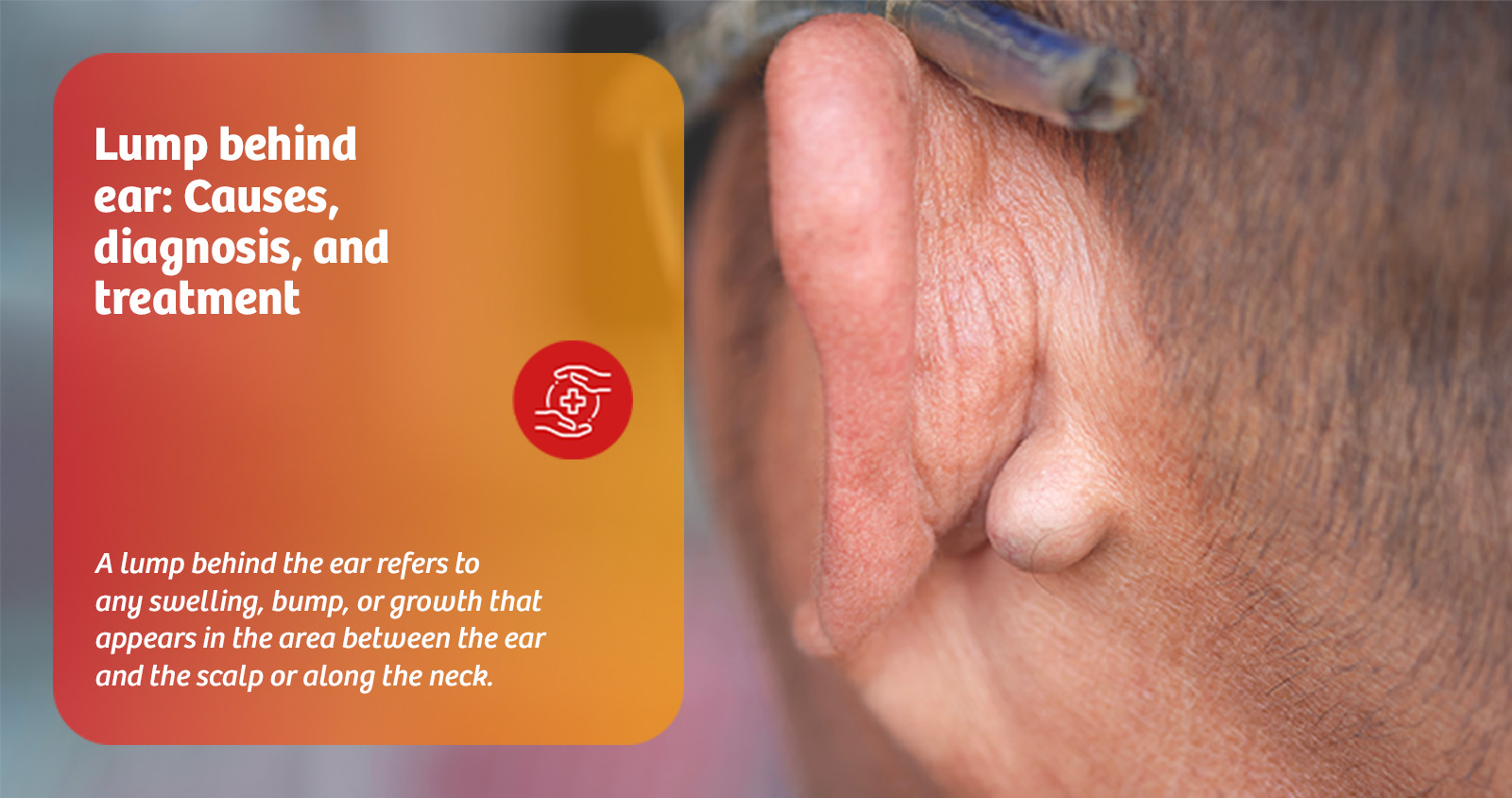
A lump behind the ear refers to any swelling, bump, or growth that appears in the area between the ear and the scalp or along the neck. These lumps can vary in size, texture, and tenderness. Some may be soft and movable, while others may feel firm or fixed.
In many cases, these lumps are benign (non-cancerous) and resolve on their own. However, persistent or painful lumps should not be ignored.
1. Swollen lymph nodes
One of the most common causes of a lump behind the ear is swollen lymph nodes. Lymph nodes are essential components of the immune system that help the body fight infections.
When your body is battling infections such as a cold, throat infection, or ear infection, these nodes may swell and become tender.
Symptoms
2. Sebaceous cysts
Sebaceous cysts are non-cancerous lumps filled with oily or cheese-like material. They develop when oil glands or hair follicles become blocked.
Symptoms
3. Lipoma
A lipoma is a soft, fatty lump that grows under the skin. It is generally harmless and does not require treatment unless it causes discomfort or cosmetic concern.
Symptoms
4. Mastoiditis
Mastoiditis is a serious bacterial infection that affects the mastoid bone, which is located behind the ear. It often occurs as a complication of untreated ear infections.
Symptoms
This condition requires immediate medical attention.
5. Abscess
An abscess is a collection of pus caused by bacterial infection. It can develop due to infected hair follicles, skin injuries, or untreated infections.
Symptoms
6. Acne or skin infections
What seems to be a lump behind the ear could be a pimple or a localised skin infection.
Symptoms
7. Benign tumours
Certain non-cancerous growths, such as fibromas or dermoid cysts, can also appear behind the ear.
These are usually slow-growing and painless.
8. Malignant tumours (Rare)
In rare cases, a lump behind the ear could be cancerous, such as lymphoma or skin cancer.
Warning signs include
Early detection is crucial for effective treatment.
When should you see a doctor?
While many lumps are harmless, you should consult a healthcare professional if you notice
Prompt evaluation ensures accurate diagnosis and timely treatment.
A proper diagnosis involves a combination of clinical examination and diagnostic tests.
1. Medical history and physical examination
Your doctor will assess
2. Imaging tests
Imaging helps determine the nature and extent of the lump.
3. Blood tests
Blood tests may be done to detect infections or inflammation.
4. Biopsy
If there is suspicion of a tumour, a biopsy may be performed to examine tissue under a microscope.
Treatment options
Treatment depends on the underlying cause of the lump.
1. Observation
Small, painless lumps that are not growing may only require monitoring.
2. Medications
3. Drainage
Abscesses may require surgical drainage to remove pus and relieve pressure.
4. Surgical removal
Cysts, lipomas, or benign tumours may be surgically removed if they
5. Advanced treatment for serious conditions
If the lump is cancerous, treatment may include
A multidisciplinary approach ensures the best outcomes.
Home care and prevention tips
While not all lumps can be prevented, maintaining good hygiene and overall health can reduce risk.
Is a lump behind the ear always serious?
No, most lumps are benign and temporary. However, persistent or painful lumps should be evaluated.
Can stress cause lumps behind the ear?
While stress itself does not directly cause lumps, it can weaken your immunity, making you more susceptible to infections.
Are lumps behind the ear common in children?
Yes, children often develop swollen lymph nodes due to frequent infections, which usually resolve on their own.
How long does a lump take to go away?
It depends on the cause. Some may resolve within days, while others may persist and require treatment.
Best ENT hospital in Ahmedabad.
A lump behind the ear is a common concern with a wide range of possible causes, from harmless cysts to more serious conditions. While many lumps are not dangerous, it is crucial to remain vigilant and seek medical advice if the lump persists, grows, or causes discomfort.
Early diagnosis plays a key role in effective treatment and peace of mind. If you or your loved ones notice any unusual swelling behind the ear, do not ignore it—timely medical evaluation can make all the difference.
