


By Dr Gautam Parmar
Consultant Urology
May 01, 2026
A practical, doctor-informed guide tailored to Indian cuisine, because your thali can either heal or harm your kidneys.
12%
Indians are affected by kidney stones throughout their lifetime
50%
Recurrence risk without dietary changes
2.5 Liter
Minimum daily water intake recommended
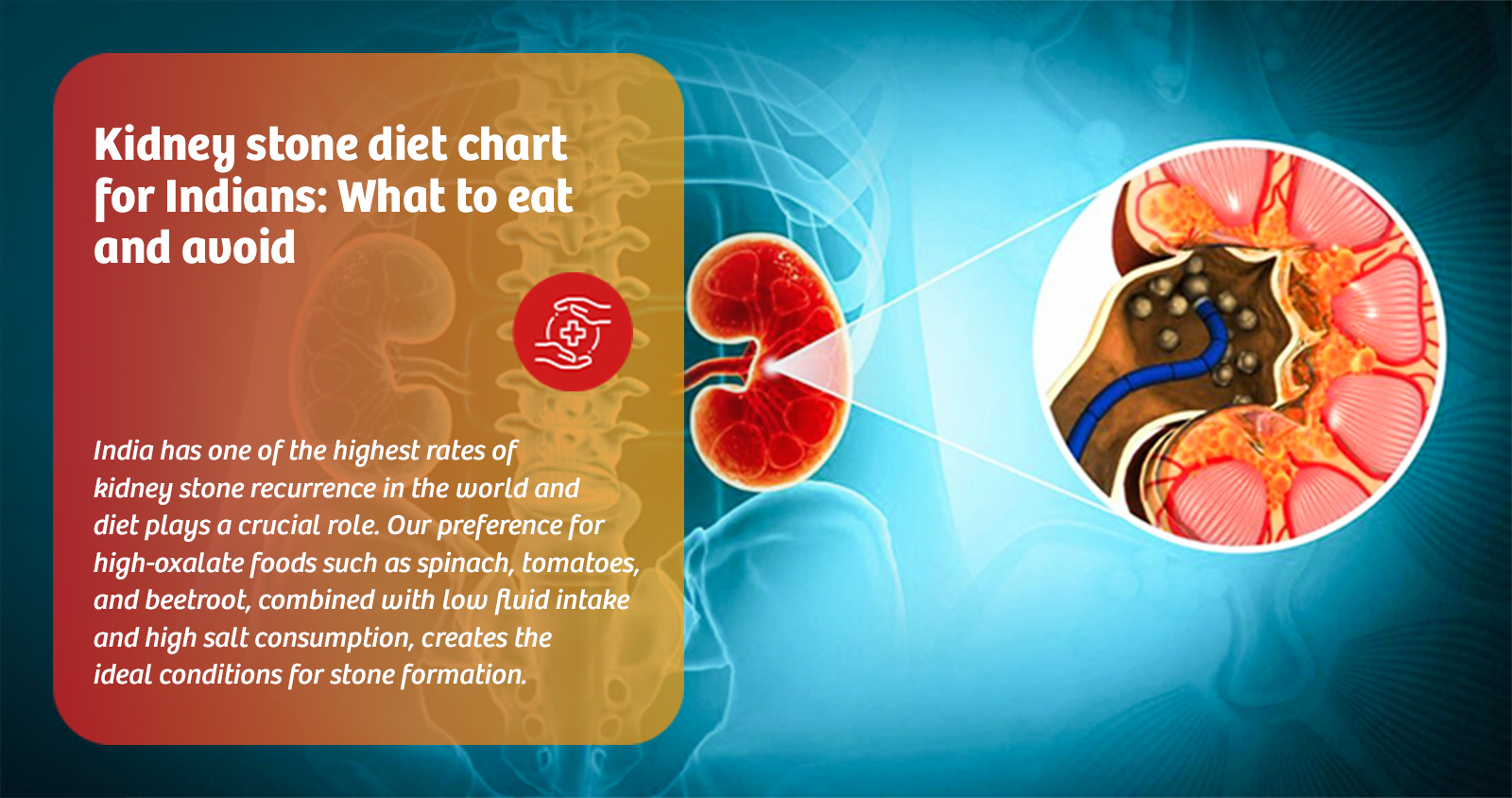
India has one of the highest rates of kidney stone recurrence in the world and diet plays a crucial role. Our preference for high-oxalate foods such as spinach, tomatoes, and beetroot, combined with low fluid intake and high salt consumption, creates the ideal conditions for stone formation.
Up to 80% of kidney stones can be prevented through targeted dietary changes. You do not need to abandon Indian food; you need to make smarter food choices.
Most kidney stones in India are calcium oxalate stones. Reducing oxalate-rich foods and increasing fluid intake can significantly lower your risk.
Types of kidney stones & their dietary triggers
Not all kidney stones are the same. Identifying your stone type helps guide appropriate dietary choices.
Calcium oxalate stones (75%)
Triggers: High-oxalate foods (palak, tomatoes, beetroot), excess vitamin C, low calcium intake, and inadequate fluid intake.
Dietary advice: Reduce oxalate-rich foods. Consume calcium with meals (not separately) to help bind oxalate in the gut.
Foods to eat: Your kidney-friendly choices
These foods are safe, nourishing, and commonly available in Indian kitchens. Include them regularly in your diet.
Foods you can include regularly
Foods to limit
Kidney-friendly options
Foods to limit
Pro tip
Boiling oxalate-rich vegetables and discarding the water can reduce their oxalate content by up to 30–40%. For example, boiled spinach is significantly safer than raw.
Recommended options
Foods to reduce
Foods to strictly avoid
These are major contributors to kidney stone formation and recurrence:
Salt and namkeen
High sodium increases calcium excretion in urine. Limit intake of papad and processed snacks. Aim for less than 2,300 mg of sodium per day.
Vitamin C Supplements (>1000 mg)
Excess vitamin C converts to oxalate in the body. Avoid high-dose supplements.
Cold drinks and soda
Phosphoric acid in cola beverages increases stone risk. Replace with nimbu pani (without excess salt) or coconut water.
Excess tea and coffee
Both contain oxalates. Limit to 1–2 cups per day and avoid consuming on an empty stomach.
Alcohol (especially beer)
Increases uric acid production and stone risk.
Hydration: Your most powerful defence
No intervention is more effective than adequate hydration. Drinking enough fluids dilutes minerals in the urine and prevents crystal formation.
Aim to produce at least 2–2.5 litres of urine daily. Your urine should be pale yellow, not dark.
Drink 8–10 glasses of water daily.
Best fluids for kidney stone patients
Smart habit
Drink a glass of water after waking up, before meals, and before bed. During hot Indian summers, increase intake to 3+ litres per day.
Can I drink milk if I have kidney stones?
Yes, in moderation. Calcium from dairy helps bind oxalate in the gut and reduces absorption. Aim for 2–3 servings daily with meals.
Is dal harmful for kidney stone patients?
It depends on the type of stone. Moong dal is the safest option for oxalate stones. Rajma, chana, and urad dal should be limited.
Can I eat curd (yoghurt) daily?
Yes. One small bowl daily is beneficial. Avoid excessive consumption.
Is lemon water helpful?
Absolutely. Lemon contains citrate, a natural inhibitor of calcium oxalate stone formation. A daily glass of nimbu pani (without excess salt or sugar) is highly recommended.
Should I avoid all high-protein foods?
No. Protein is essential. However, excessive animal protein should be avoided. Prefer plant-based sources such as moong dal and tofu.
