


By Dr Kush Shah
Consultant Urology
Apr 23, 2026
Anyone who has experienced a kidney stone knows the intense, sharp pain it can cause. This sudden discomfort often leads people to seek immediate relief. If you are currently dealing with this issue, your primary goal is likely to get the stone out of your system as quickly as possible.
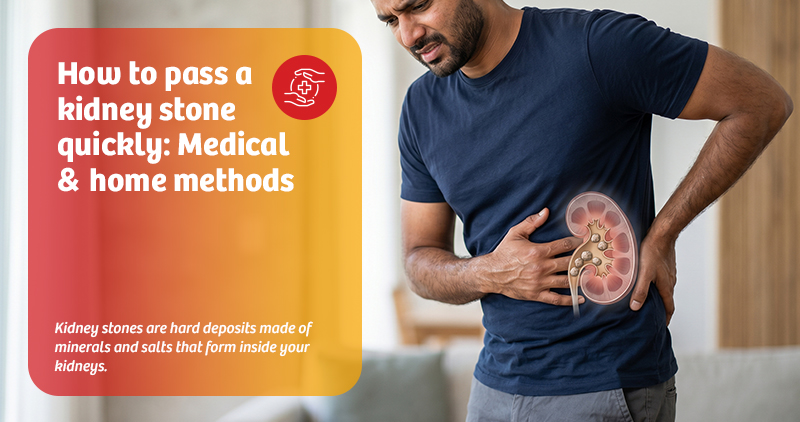
Kidney stones are hard deposits made of minerals and salts that form inside your kidneys. They can affect any part of your urinary tract, from your kidneys to your bladder. Passing them can be quite painful, but they usually do not cause permanent damage if identified in time.
Depending on your situation, you may need nothing more than pain relief and increased fluid intake to pass a kidney stone. In other cases, medical intervention may be required. This guide explains the most effective home remedies and medical treatments to help you pass a kidney stone quickly and safely.
Before trying any method to pass a kidney stone, it is important to understand that size determines the treatment. Stones smaller than 5 millimetres have a high chance of passing on their own. The process can take anywhere from a few days to a couple of weeks.
Stones larger than 5 millimetres are much less likely to pass without medical intervention. They can become lodged in the urinary tract, causing severe pain, bleeding, or urinary blockage. A doctor can perform imaging tests, such as a CT scan or ultrasound, to determine the exact size and location of your stone. This information is crucial in determining the most appropriate approach.
If your doctor confirms that your kidney stone is small enough to pass naturally, you can use several at-home strategies to speed up the process.
Water is your best tool for flushing a kidney stone out of your system. Increased fluid intake boosts urine volume, helping push the stone down the urinary tract. Aim to drink up to three litres of water a day until the stone passes. You will know you are drinking enough when your urine appears clear or very pale yellow. Dark urine is a clear sign of dehydration.
Squeezing fresh lemon juice into your water provides more than just a refreshing flavour. Lemons contain citrate, a chemical that helps prevent calcium stones from forming. Citrate may also help break down small stones, making them easier to pass. Use fresh lemons rather than bottled juice, as packaged versions often contain added sugars and less citrate.
Light physical activity can help the stone pass more easily. Walking or gentle jogging uses gravity and body movement to encourage it to travel down the ureter. Avoid heavy lifting or strenuous exercise, as these may lead to dehydration and worsen the pain. Listen to your body and rest when required.
Passing a stone can be painful. Over-the-counter pain relievers such as ibuprofen, paracetamol, or naproxen sodium can help make the process more manageable. Reducing pain may also help relax the muscles, making it easier for the stone to pass. Always follow dosage instructions and consult your doctor if you have any underlying health conditions.
Home remedies are not always sufficient. If a stone is too large, obstructs urine flow, or causes an infection, medical treatment may be required. Urologists use several effective methods to manage difficult kidney stones.
Doctors often prescribe medications known as alpha-blockers to help pass kidney stones. These relax the muscles in the ureter, allowing the stone to pass more easily and with less pain. Tamsulosin is the most commonly prescribed option.
For slightly larger stones, ESWL is a widely used, non-invasive procedure. It uses sound waves to break the stone into smaller fragments, which can then pass through the urine. The procedure typically takes 45 to 60 minutes and may cause mild discomfort.
If the stone is lodged in the ureter or bladder, a ureteroscopy may be recommended. A thin, flexible tube with a camera is passed through the urethra into the urinary tract. The stone is then either removed or broken into smaller pieces using a laser. This procedure is usually performed under general anaesthesia.
For large kidney stones, this surgical procedure may be required. It involves removing the stone through a small incision in the back using specialised instruments. General anaesthesia is required, and hospital stay is typically one to two days.
How long does it take for a kidney stone to pass?
Small stones (under 4 mm) usually pass within one to two weeks. Larger stones (around 5 mm) may take up to four weeks. If a stone does not pass after a month or if the pain becomes severe, medical attention is recommended.
Does apple cider vinegar help?
Apple cider vinegar contains acetic acid, which may help dissolve kidney stones. Mix two tablespoons with water and consume in moderation. Avoid excessive intake, as it may harm tooth enamel and the throat.
What are emergency signs?
Seek immediate medical care if you experience
Dealing with a kidney stone can be stressful, but effective treatment options are available. Begin by consulting a healthcare professional to determine the size and location of your stone.
If the stone is small, focus on hydration, activity, and pain management. If complications arise, your urologist will guide you towards the most suitable medical treatment.Taking timely and informed action will help you recover faster and return to your normal, pain-free life. If you suspect a kidney stone, consult your doctor for an accurate diagnosis and personalised treatment plan.
