


By Dr Archana Jadeja
Consultant - Internal Medicine
April 09, 2026
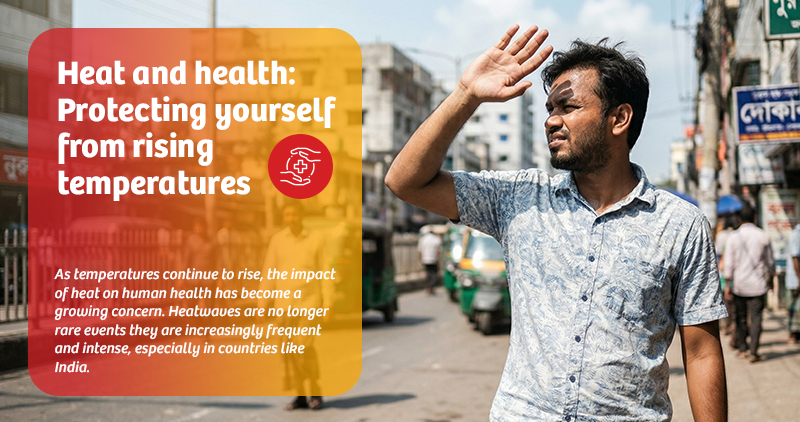
As temperatures continue to rise, the impact of heat on human health has become a growing concern. Heatwaves are no longer rare events—they are increasingly frequent and intense, especially in countries like India.
Understanding how heat affects the body and learning ways to stay safe is essential for everyone, particularly vulnerable groups such as children, the elderly, and individuals with chronic illnesses.
The human body is designed to maintain a stable internal temperature, typically around 37°C. When exposed to high environmental temperatures, the body relies on mechanisms such as sweating and increased blood circulation to cool itself down. However, prolonged exposure to extreme heat can overwhelm these mechanisms, leading to heat-related illnesses.
When the body cannot cool itself effectively, it can result in dehydration, electrolyte imbalance, and, in severe cases, organ damage. This makes it not just uncomfortable, but potentially dangerous.
1. Heat exhaustion
Heat exhaustion occurs when the body loses excessive water and salt through sweating. Symptoms include
If untreated, heat exhaustion can progress to a more serious condition.
2. Heatstroke (Medical emergency)
Heatstroke is a life-threatening condition where the body temperature rises above 40°C. It requires immediate medical attention.
Symptoms include
3. Heat cramps
These are painful muscle spasms caused by the loss of electrolytes during intense sweating, often seen in people engaging in physical activity in hot environments.
4. Heat rash
Heat rash, also known as prickly heat, is caused by blocked sweat ducts, resulting in red, itchy skin.
Certain groups are more vulnerable to heat-related health problems
1. Cardiovascular system
High temperatures cause blood vessels to widen, which can lower blood pressure and put strain on the heart. It can be dangerous for individuals with heart conditions.
2. Respiratory system
Polluted and hot air can aggravate breathing issues, especially in asthma patients or those with chronic lung diseases.
3. Nervous system
Severe heat can affect brain function, leading to confusion, irritability, or even loss of consciousness.
4. Skin
Excessive sweating and sun exposure can lead to dehydration, sunburn, and skin infections.
Recognising early symptoms can prevent serious complications
If any of these symptoms occur, it is important to cool down immediately and seek medical help if necessary.
Stay hydrated
Drink plenty of water throughout the day, even if you are not thirsty. Include fluids like coconut water, buttermilk, and fresh juices.
Avoid peak heat hours
Try to stay indoors between 12 PM and 4 PM when the sun is at its strongest.
Wear appropriate clothing
Opt for light-colored, loose-fitting, and breathable fabrics such as cotton.
Keep your environment cool
Use fans, air conditioners, or coolers, and keep curtains closed during the day to reduce indoor heat.
Eat light and healthy
Opt for water-rich foods such as fruits and vegetables. Avoid heavy, oily, or spicy meals.
Limit physical activity
Avoid strenuous activities during peak heat hours. Exercise early in the morning or late in the evening.
Protect your skin
Use sunscreen, wear hats or caps, and cover exposed skin when outdoors.
For Children
For the elderly
Immediate medical attention is required if
Heatstroke is a medical emergency and should never be ignored.
Heat safety is not just an individual concern—it is a public health priority. Schools, workplaces, and communities should promote awareness about heat risks and preventive measures. Providing shaded areas, access to drinking water, and flexible working hours during heatwaves can make a significant difference.
Heat and health are closely linked, and rising temperatures pose a serious risk to well-being. While the effects of heat can range from mild discomfort to life-threatening conditions, most heat-related illnesses are preventable with simple precautions.
By staying informed, hydrated, and cautious, you can protect yourself and your loved ones from the harmful effects of heat. Remember, prevention is always better than cure—especially when it comes to heat-related health risks.
