


By Dr Archana Jadeja
Consultant Internal Medicine
July 02, 2026
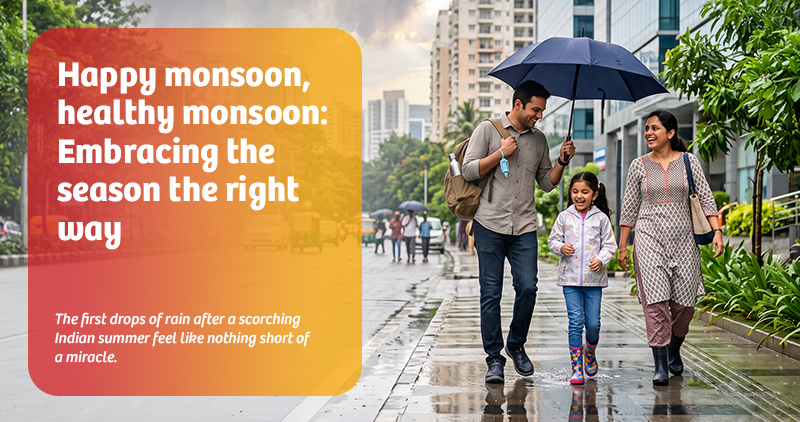
The first drops of rain after a scorching Indian summer feel like nothing short of a miracle. The parched earth drinks up greedily, the air turns cool and fragrant, and something deep inside us exhales. Monsoon season, stretching roughly from June through September, is perhaps the most awaited time of year across the Indian subcontinent. It brings relief, romance, and renewal. But it also brings with it a host of health challenges that, if ignored, can turn the season's joy into misery. The good news? With a little awareness and some simple habits, you can have both a happy monsoon and a healthy one.
The magic of monsoon: Why we love it
There is a reason poets have written about the monsoon for centuries. The sight of dark clouds rolling in over the horizon, the smell of wet mud (petrichor, one of the most beloved scents in the world), and the sound of rain drumming on rooftops create an atmosphere unlike any other season. For farmers, it is the lifeline of their livelihood. For city dwellers, it is an escape from the relentless heat. For children, it is puddles, paper boats, and laughter.
Monsoon also brings a burst of greenery. Trees look washed and vivid. Rivers and lakes fill up. Waterfalls that were dry trickles roar back to life. Nature, in every sense, is reborn.
But as magical as the season feels, it demands respect. The same moisture that nourishes the earth also creates the perfect breeding ground for bacteria, viruses, mosquitoes, and fungi. Understanding this balance is the first step toward enjoying the season without falling ill.
1. Waterborne diseases
Contaminated water is one of the biggest monsoon threats. Heavy rainfall can cause sewage systems to overflow, leading to contamination of drinking water sources. Diseases like typhoid, cholera, hepatitis A, and gastroenteritis spread rapidly during this period. The safest rule: always drink boiled or purified water, and avoid ice from unknown sources.
2. Mosquito-borne illnesses
Standing water in pots, tyres, coolers, and clogged drains serves as a breeding ground for mosquitoes. Dengue, malaria, and chikungunya cases spike every monsoon. Wearing full-sleeved clothing, using mosquito repellents, and ensuring no stagnant water accumulates around your home are simple but effective defences.
3. Viral fever and cold
The fluctuating temperatures of the monsoon weaken the immune system and make us vulnerable to the common cold, flu, and viral fevers. Getting drenched and then sitting in air-conditioned spaces is a classic recipe for illness. Keeping yourself dry, staying warm after exposure to rain, and maintaining good hand hygiene go a long way.
4. Fungal infections
Humidity creates an ideal environment for fungal growth on the skin, particularly in areas like the feet, groin, and underarms. Athlete's foot and ringworm are common complaints. Keeping skin dry, wearing breathable cotton clothes, and changing damp socks promptly can prevent most fungal issues.
5. Digestive problems
Street food during monsoon, however tempting, is a common cause of stomach infections. Vegetables and fruits are more prone to contamination. Washing produce thoroughly, avoiding raw salads from outside, and being cautious about roadside chaat and cut fruits can protect your gut.
Diet plays a crucial role in how well your body weathers the monsoon. A few smart food choices can dramatically improve your immunity and energy levels.
Go warm and cooked. This is the season to embrace hot soups, dal, khichdi, and freshly cooked meals. Warm food is easier to digest and less likely to harbour bacteria.
Boost immunity naturally. Include ginger, garlic, turmeric, and tulsi in your daily cooking. These are proven immunity boosters that also possess antimicrobial properties. A cup of ginger-tulsi tea on a rainy afternoon is both delicious and medicinal.
Stay hydrated, but wisely. You might feel less thirsty in cool weather, but your body still needs water. Drink enough fluids, herbal teas, warm lemon water, and soups count. Avoid unbottled juice and beverages with ice.
Eat light. The digestive system slows down in humid weather. Heavy, fried, or rich foods are harder to process and can lead to bloating and indigestion. Lighter meals, steamed, stewed, or sautéed, are kinder to your system.
Choose seasonal produce wisely. While monsoon brings an abundance of vegetables, some are more prone to contamination. Leafy greens like spinach and methi contain moisture and insects; wash them thoroughly or choose other vegetables. Bitter gourd, bottle gourd, turmeric, and corn are excellent seasonal choices.
Monsoon is not an excuse to become a couch potato, though it is undeniably tempting. Physical activity keeps your immunity strong and your mood lifted. A few adjustments can help you stay active safely:
If outdoor runs are off the table due to waterlogging or heavy rain, shift your workout indoors. Yoga, home exercises, and dancing (yes, dancing in the rain counts) are all excellent options. Many people find that the sound of rain makes for the most calming yoga or meditation sessions.
Mental health matters just as much during the monsoon. The grey skies and reduced sunlight can trigger a mild seasonal mood dip in some people. Counter this by staying socially connected, pursuing creative hobbies, and making time for activities that genuinely delight you, be it reading, cooking, or watching old films wrapped in a blanket.
Here are some easy habits to make part of your monsoon routine:
Keep a change of clothes handy at work or school so you are never stuck in wet clothes for long. Make sure to dry your feet thoroughly coming home and apply moisturiser to prevent cracking. Instead of getting drenched in the rain, use an umbrella; the novelty of being soaked wears off quickly when you're dealing with a fever. Check your home weekly for any stagnant water to reduce the risk of pests. Take care of your skin during this season, as sweat and humidity can clog your pores; remember to cleanse your face regularly.
The monsoon is one of nature's most generous gifts. It sustains agriculture, replenishes groundwater, and cools a land that desperately needs relief. More than that, it offers us something rare in our busy lives: A reason to slow down, look out the window, listen to the rain, and feel connected to something larger than our daily routines.
With the right precautions, there is absolutely no reason to fear the season. Think of health measures not as restrictions but as the price of entry into the season's full enjoyment. When you are well-nourished, well-rested, and disease-free, you can fully savour everything monsoon has to offer, the earthy smell of the first rain, the steaming cup of chai, the cool breeze through wet leaves, the magic of a rainbow after a downpour.
So step into this monsoon with joy in your heart and wisdom in your habits. Let the rain wash away the summer's heat and your worries alike. Stay safe, eat well, and let this beautiful, imperfect, utterly irresistible season fill you with everything it has to offer.
Happy monsoon. Healthy monsoon.
