


Whatsapp

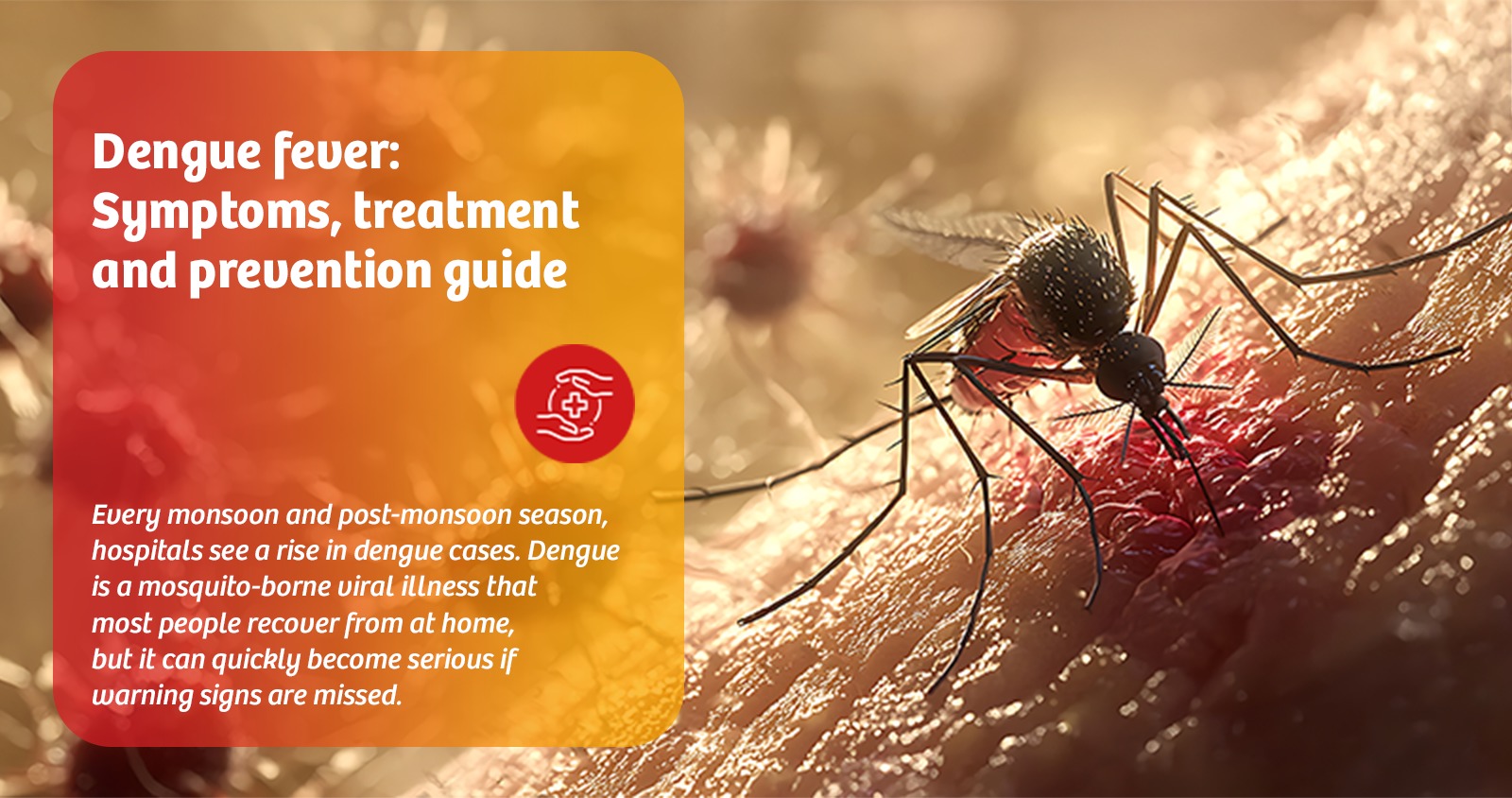
Dengue fever: Symptoms, treatment and prevention guide

Dengue Fever: Symptoms, Treatment and Prevention Guide

Every monsoon and post-monsoon season, hospitals see a rise in dengue cases. Dengue is a mosquito-borne viral illness that most people recover from at home, but it can quickly become serious if warning signs are missed. This guide covers what to look for, when to see a doctor, and how to protect your family.

What is dengue fever?

Dengue is a viral infection spread by bites from an infected Aedes aegypti mosquito. It is not contagious from person to person. The mosquito bites an infected person, then passes the virus on to others.

There are four dengue virus types. Recovering from one gives lifelong protection against that type only, and a second infection with a different type can be more severe.

How does dengue spread?

  • Aedes mosquitoes can breed in clean, stagnant water—not only in dirty drains.
  • They are most active in the early morning and late afternoon.
  • Common breeding spots include coolers, flower pots, buckets, discarded tyres, water tanks and plant trays.

Common dengue symptoms

Symptoms usually appear 4 to 10 days after the bite and last about 2 to 7 days:

  • Sudden high fever, often 102°F or above
  • Severe headache and pain behind the eyes
  • Muscle, bone and joint pain, sometimes described as “breakbone fever”
  • Nausea and vomiting
  • Skin rash
  • Swollen glands
  • Mild bleeding from the nose or gums
  • Extreme tiredness

Dengue warning signs: When to go to the hospital

Most critical period is when patient has fever, usually around day 3 to day 7. This is when some patients develop severe dengue. Seek medical care immediately if you or a family member has:

  • Severe or persistent stomach pain
  • Repeated vomiting
  • Bleeding from the gums or nose, or blood in vomit or stools
  • Black or tarry stools
  • Rapid breathing or difficulty breathing
  • Extreme weakness, restlessness or drowsiness
  • Cold, clammy skin
  • Reduced urination

Do not wait for the platelet count to fall before consulting a doctor. Early monitoring saves lives.

How is dengue diagnosed?

Doctors typically confirm dengue with:

  • NS1 antigen test (most useful in the first few days of fever)
  • Dengue IgM/IgG antibody tests (useful after day 5)
  • Complete blood count (CBC) to track platelets, hematocrit and white cells.

Dengue treatment

There is no specific antiviral medicine for dengue. Treatment focuses on supportive care:

  1. Rest and plenty of fluids: water, ORS, coconut water, soups and fruit juices.
  2. Paracetamol: for fever and body pain, at doses advised by your doctor.
  3. Avoid aspirin, ibuprofen and other NSAIDs: as they can increase bleeding risk.
  4. Regular blood tests and monitoring: as advised by your doctor.
  5. Hospital admission:when warning signs appear, platelets fall sharply, or the patient cannot drink enough fluids. This may include IV fluids and close monitoring.

Dengue and platelet count: What you should know

A falling platelet count is common in dengue, but a low number alone does not always mean a platelet transfusion is needed. Doctors decide based on your overall condition, bleeding signs and trends in blood tests. Avoid self-medicating with unproven remedies, and follow your treating doctor's advice.

Dengue recovery diet tips

  • Drink fluids frequently, in small amounts if you feel nauseous.
  • Eat light, easily digestible foods such as khichdi, dal, curd and fruit.
  • Include vitamin C-rich foods such as oranges, amla and lemon.
  • Avoid oily, spicy and heavy food during recovery.

How to prevent dengue

At home

  • Empty and scrub water containers, coolers, plant saucers and trays at least once a week.
  • Cover water tanks and storage vessels tightly.
  • Do not let water collect in old tyres, containers or terraces.

Personal protection

  • Wear full-sleeved clothes and long pants, especially at dawn and dusk.
  • Use mosquito repellents and nets.
  • Fit window and door screens.
  • Keep children's play areas free of stagnant water.

In your community

  • Report waterlogging to local civic authorities.
  • Support fogging and cleanliness drives in your society.

Frequently asked questions

Q1. How long does dengue fever last?

Most people recover in 7 to 10 days, though fatigue can last a few weeks.

Q2. Can dengue be treated at home?

Mild cases can be managed at home under medical guidance with rest, fluids and monitoring. Any warning sign needs immediate hospital care .

Q3. Can you get dengue more than once?

Yes. There are four types of the virus, and a repeat infection with a different type can be more severe.

Q4. Is dengue contagious?

No. It spreads only through mosquito bites, not through touch, coughing or sharing food.

Q5. What is the difference between dengue and malaria?

Both are mosquito-borne with fever, but they are caused by different organisms (virus vs. parasite) and need different treatment. Only a blood test can tell them apart, so do not self-diagnose.

Q6. Which medicines should be avoided in dengue?

Aspirin and NSAIDs such as ibuprofen and diclofenac. Always ask your doctor first.

If you or a loved one has a fever that will not go away, do not delay. The team at KD Hospital provides prompt diagnosis, round-the-clock monitoring and expert care for dengue and other seasonal infections.