


By Dr Krunal Tamakuwala
Consultant Interventional Cardiologist
Nov 14, 2026
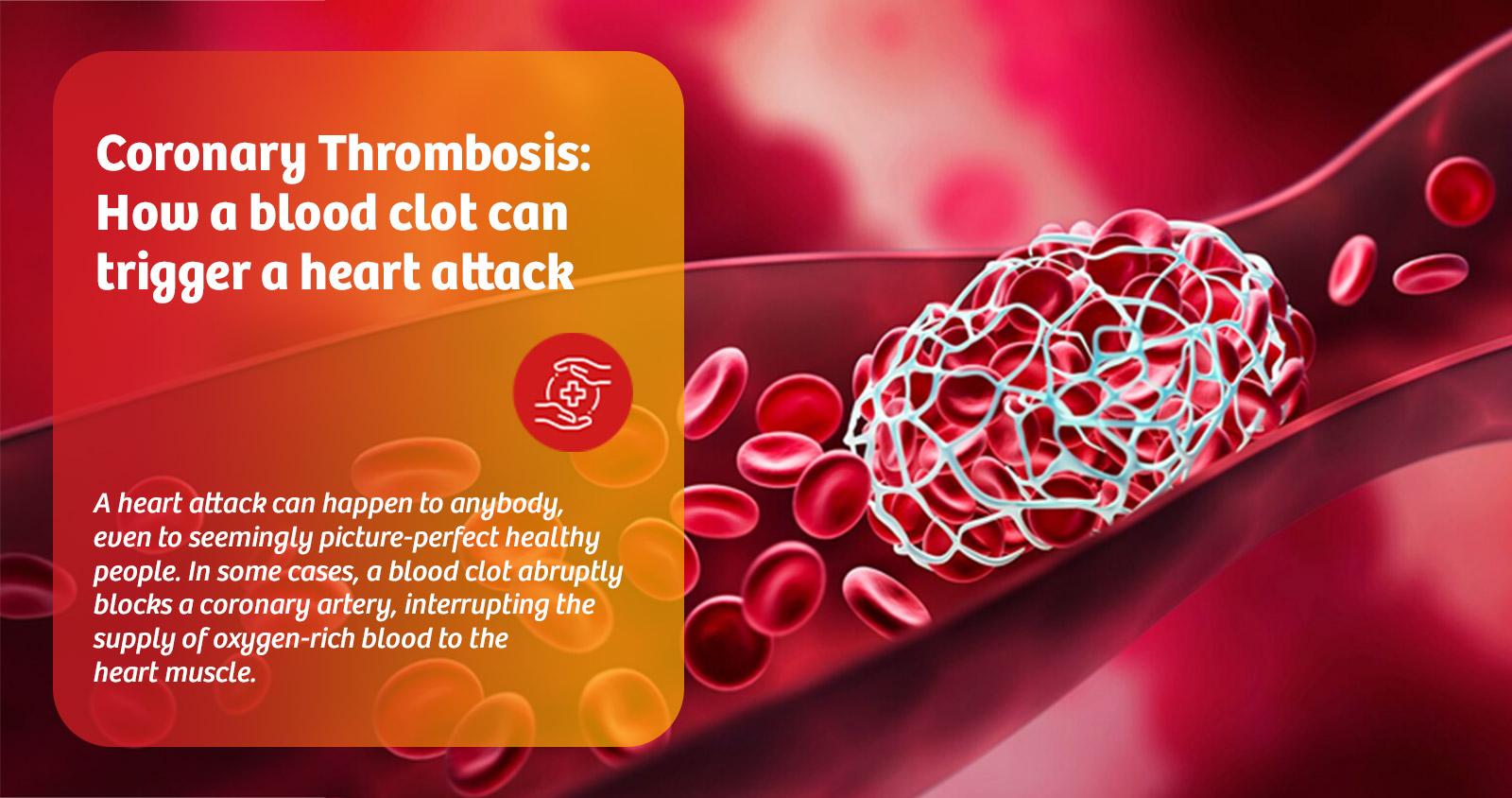
A heart attack can happen to anybody, even to seemingly picture-perfect healthy people. In some cases, a blood clot abruptly blocks a coronary artery, interrupting the supply of oxygen-rich blood to the heart muscle. This condition is known as coronary thrombosis.
Although the cardiac event itself may be sudden, the underlying disease can in many cases have been developing quietly over many years. The key to saving lives is in recognising the warning signs, understanding the risk factors and getting to a doctor as quickly as possible.
The heart is dependent on a constant supply of oxygenated blood via the coronary arteries. Coronary thrombosis is the formation of a thrombus (blood clot) within a coronary artery that either partially or completely obstructs the flow of blood. When the blockage is severe enough to significantly reduce the oxygen supply to the heart muscle, it can lead to myocardial ischaemia, and if that state is sustained, then irreversible muscle damage (a myocardial infarction or heart attack) will occur.
In the vast majority of acute coronary events, the process starts with atherosclerosis (i.e., the build-up of cholesterol-laden plaques in the wall of the coronary arteries).
These plaques can remain completely silent for years. If, however, the plaque ruptures or its surface becomes eroded, then blood components (in particular platelets) become activated and the coagulation system is switched on, resulting in a very rapid formation of a clot.
The clot may either partially or completely occlude the artery, resulting in a sudden reduction of blood flow to the myocardium. That's why a heart attack can be the first manifestation of CAD in a patient who may otherwise have had no apparent symptoms at all.
In cardiology world, the terms 'coronary thrombosis' and 'heart attack' are connected, but they are not identical. Their individual actual explanations are:
Coronary thrombosis is a major cause of acute heart attacks, although not every coronary thrombus causes an infarction, and not every myocardial infarction is caused by an acute coronary thrombus.
The most common warning sign of coronary thrombosis is chest discomfort, which may feel like pressure, tightness, heaviness or squeezing. The discomfort may last several minutes, recur or occur at rest.
Other symptoms include:
Symptoms can be subtle or atypical, particularly in women, older adults and people with diabetes. Some may experience breathlessness, nausea, unusual tiredness or upper abdominal discomfort without prominent chest pain.
Important: If a heart attack is suspected, seek emergency medical or cardiac care immediately. Do not wait for symptoms to become severe or attempt to drive yourself to the hospital.
The major risk factors for coronary artery disease and coronary thrombosis include:
Stress and poor sleep may also contribute to cardiovascular risk, especially when combined with other risk factors.
Importantly, coronary events can occur in the absence of any obvious conventional risk factors. Routine assessment and early management of cardiovascular risk is still very much the way to go.
When a coronary artery becomes acutely blocked, the myocardium supplied by that artery starts to suffer from ischaemia. The longer the interruption in blood supply leads, the greater the potential for irreversible damage.
The delay in cardiac treatment in the cases of cardiovascular events or symptoms can increase the risk of heart failure, life-threatening arrhythmias and death. Symptoms should never be dismissed as just acidity or indigestion if a heart attack is doubted.
Early recognition, rapid transfer to an appropriate medical facility and timely reperfusion are all key to improving outcomes.
Diagnosis is based on the clinical picture, an ECG, cardiac biomarkers (specifically high-sensitivity troponin) and further investigations as appropriate. Coronary angiography will identify the site and extent of the obstruction and will guide the appropriate management.
Treatment is aimed at restoring coronary blood flow, minimising the damage to the myocardium and preventing further clot formation.
Depending on the clinical situation, treatment may include:
After the acute event, comprehensive secondary prevention is of the utmost importance. This will typically involve lipid lowering, antiplatelet therapy, control of blood pressure and diabetes, smoking cessation, cardiac rehabilitation, and, of course, sustained lifestyle change.
Coronary events are unpredictable. Not every coronary event can be prevented, but risk can be substantially reduced through early identification and effective management of cardiovascular risk factors and appropriate cardiac care.
Key preventive measures include:
People with established coronary artery disease require ongoing risk-factor management and cardiac care even when they feel well.
Coronary thrombosis can develop abruptly, but the underlying atherosclerotic process often progresses silently for years. A heart attack may be the first warning that something is wrong.
Recognise the symptoms. Act without delay. Protect your heart.
Early medical attention and timely restoration of coronary blood flow can save heart muscle and lives. Prevention, regular health assessments and appropriate treatment of cardiovascular risk factors remain the foundations of long-term heart health.
