


By Dr Amir Sanghavi
Senior Orthopaedic Surgeon
Jan 07, 2026
In the world of competitive sports, there's a pervasive belief that success requires constant pushing, endless training sessions, and an unwavering commitment to doing more. Athletes are often celebrated for their relentless work ethic and their ability to push through pain and exhaustion. However, this mentality has a dark side that many athletes, coaches, and sports organisations are only beginning to understand: athletic burnout.
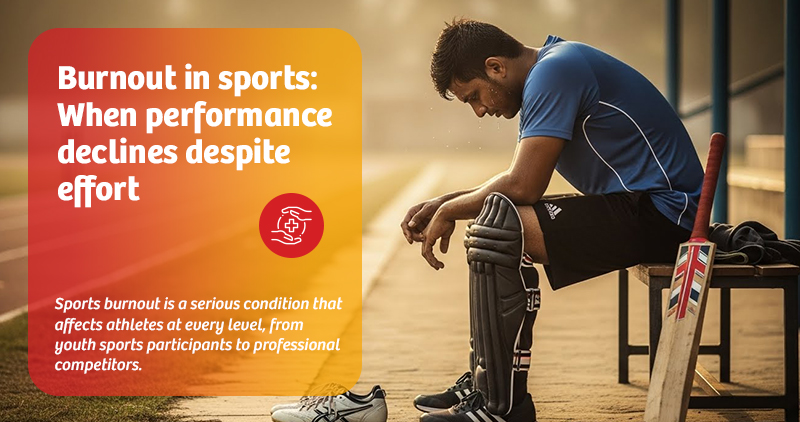
Sports burnout is a serious condition that affects athletes at every level, from youth sports participants to professional competitors. Understanding what burnout looks like, why it happens, and how to prevent it is crucial for anyone involved in athletics.
Athletic burnout is a state of physical, emotional, and mental exhaustion caused by prolonged and excessive stress related to sports participation. It goes far beyond simple fatigue or having an off day. Burnout represents a fundamental breakdown in an athlete’s relationship with their sport, often characterised by decreased performance, loss of motivation, and a feeling that no amount of effort leads to meaningful improvement.
The condition typically manifests through three key dimensions. Physical exhaustion causes athletes to feel persistently fatigued, regardless of the rest they receive. Emotional exhaustion leads to detachment, cynicism toward the sport, and a loss of the passion and enjoyment that once motivated their participation. Finally, there's a reduced sense of accomplishment where athletes feel their efforts are meaningless and their performance continues to decline despite working harder.
Modern sports culture often glorifies the grind. Social media feeds are filled with athletes posting about early morning workouts, late-night training sessions, and sacrificing everything for their goals. While dedication and hard work are certainly important, the relentless pressure to constantly do more creates a perfect storm for burnout.
Young athletes are particularly vulnerable. Many specialise in a single sport at increasingly early ages, training year-round without adequate recovery periods.
The pressure to earn college scholarships, impress coaches, or live up to parental expectations can transform something they once loved into a source of chronic stress and anxiety.
Professional and elite athletes face their own challenges. The financial pressures, public scrutiny, demanding schedules, and fear of losing their position or sponsorships can make it difficult to recognise when they need to step back. The competitive nature of sports means that taking time off can feel like falling behind or letting down teammates and fans.
Early recognition of burnout symptoms can make the difference between a temporary setback and a career-ending condition. Athletes and their supporters should watch for several key indicators.
Performance-related signs include persistent decreases in athletic performance despite maintained or increased training, difficulty concentrating during practice or competition, increased injuries or illnesses, and slower recovery times between workouts or competitions.
Emotional and psychological symptoms encompass loss of enthusiasm for the sport, irritability or mood swings, feelings of resentment toward coaches or teammates, anxiety or depression related to sports participation, and difficulty sleeping or changes in appetite.
Behavioural changes may include withdrawing from teammates and social activities, making excuses to avoid practices or competitions, expressing thoughts about quitting the sport, and losing interest in activities outside of athletics.
Understanding the physiology of training and recovery reveals why more isn't always better. When athletes train, they create stress on their bodies. This stress, when followed by adequate recovery, leads to adaptation and improved performance. However, without sufficient recovery, the body cannot adapt, and performance actually declines.
This principle, known as the stimulus-recovery-adaptation cycle, is fundamental to athletic development. Overtraining interrupts the body's natural cycle, causing constant stress without adequate recovery and strengthening opportunities.
Research consistently shows that periodised training programs that incorporate strategic rest periods produce better results than constant high-intensity training. Elite athletes and successful coaches understand that rest days aren't wasted days but rather essential components of a comprehensive training program.
Preventing burnout requires a multifaceted approach that addresses physical training, mental health, and overall lifestyle balance.
Smart training programming is essential. Work with knowledgeable coaches who understand periodisation and incorporate adequate recovery into training plans. Include regular rest days and lighter training weeks, cross-training and varying activities can help maintain fitness while minimising repetitive stress. Pay attention to your body and modify your training if you experience unusual fatigue or pain.
Mental skills training helps athletes develop resilience and maintain perspective. Goal setting should focus on process goals and personal improvement rather than solely on outcomes or comparison with others. Mindfulness and relaxation techniques can reduce anxiety and improve recovery. Working with sports psychologists provides tools for managing pressure and maintaining motivation.
Lifestyle balance prevents sports from consuming every aspect of life. Maintain relationships and interests outside of athletics. Work on your sleep, which is crucial for both physical recovery and mental health. Develop identity and self-worth beyond athletic performance. Take planned breaks from training during the off-season.
Building a support system creates an environment where athletes feel comfortable expressing concerns. Open communication with coaches about fatigue and stress is vital. Family and friends who understand the demands of the sport provide perspective. Teammates can offer mutual support and hold each other accountable.
Access to healthcare providers, including sports medicine physicians and mental health professionals, ensures comprehensive care.
Addressing burnout requires systemic change within sports culture. Coaches, parents, and sports organisations all play crucial roles in creating environments that support athlete well-being.
Coaches should prioritise athlete health over wins and losses, educate themselves about burnout signs and prevention, create team cultures that value rest and recovery, and encourage athletes to pursue interests outside of sports.
Parents can support their children without adding pressure by recognising that their worth isn't determined by athletic success. They should model healthy attitudes toward competition and failure, and ensure their children have time for non-sport activities and friendships.
Sports organisations should implement policies that protect young athletes from overtraining, provide education about burnout to coaches and athletes, offer mental health resources and support, and promote multi-sport participation for youth athletes.
Managing burnout in sports requires acknowledging a fundamental truth: sustainable excellence comes from balanced, intelligent training rather than relentless grinding. More isn't better when it comes at the cost of health, happiness, and ultimately performance itself.
Athletes who learn to recognise their limits, prioritise recovery, and maintain perspective on their sport's role in their lives often enjoy longer, more successful careers. They also develop skills that serve them well beyond athletics, including self-awareness, resilience, and the ability to maintain balance under pressure.
The most successful athletes aren't always those who train the hardest but rather those who train the smartest. They understand that rest is productive, that mental health matters as much as physical conditioning, and that loving their sport is just as important as excelling at it.
If you're experiencing signs of burnout, remember that seeking help is a sign of strength, not weakness. Taking time to address burnout now can save your athletic career and, more importantly, your overall well-being. Your sport should enhance your life, not consume it entirely.
The journey toward sustainable athletic excellence begins with understanding that sometimes, less is more—and that taking care of yourself is the most important training you can do. At KD Hospital, our orthopaedic and sports medicine specialists are committed to supporting athletes with comprehensive care that prioritises recovery, injury prevention, and long-term performance.
