


By Dr Mayuri Chavda Yadav
Consultant Dentistry
September 25, 2026
A confident smile can say a lot about a person. For many people, the appearance of “buck teeth”, where the upper front teeth stick out more than the lower teeth, can affect how they feel about their smile. Protruding front teeth, commonly known as buck teeth or excessive overjet, can affect both appearance and self-confidence.
A confident smile can say a lot about a person. For many people, the appearance of “buck teeth”, where the upper front teeth stick out more than the lower teeth, can affect how they feel about their smile. Protruding front teeth, commonly known as buck teeth or excessive overjet, can affect both appearance and self-confidence.
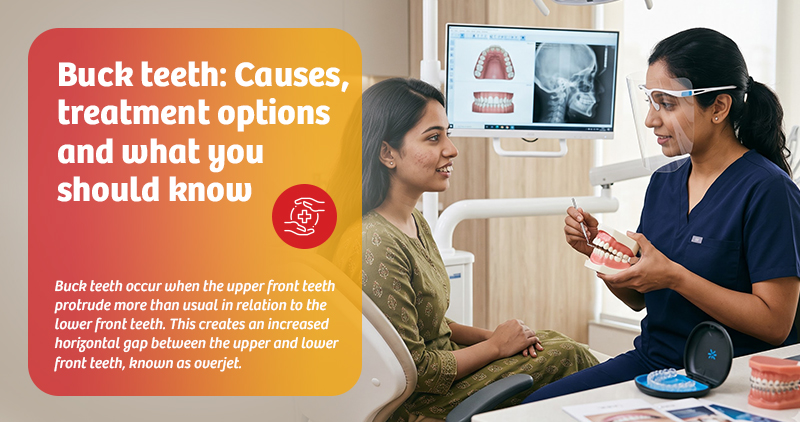
Buck teeth occur when the upper front teeth protrude more than usual in relation to the lower front teeth. This creates an increased horizontal gap between the upper and lower front teeth, known as overjet.
A small amount of overjet is normal. However, when overjet is excessive, it can affect the appearance of the smile and, in some cases, the way a person bites, speaks and maintains their oral health.
Buck teeth can develop due to a combination of genetic factors and habits or conditions during childhood growth. Some of the common causes include:
1. Genetics
Genetics can influence the size and shape of the jaw, teeth and how they are positioned. For example, a smaller lower jaw or a tendency towards increased overjet may run in families.
2. Childhood habits
Certain habits during early childhood can affect the position of the front teeth if they continue for a long time. These include:
3. Mouth breathing
Constant mouth breathing, which may occur because of a blocked nose, enlarged tonsils or other airway-related problems, may influence jaw development and tooth position in growing children.
4. Tooth and jaw size mismatch
Sometimes, the size of the teeth may not be well matched to the size of the jaws. For example, larger teeth or differences in the size or position of the upper and lower jaws can make the front teeth appear more prominent.
5. Premature loss of baby teeth
When baby teeth are lost too early, it can affect the way permanent teeth develop and erupt. In some cases, this may contribute to crowding or changes in tooth position.
6. Oral Habits
Certain habits, such as nail biting or regularly chewing on pens and other objects, can place repeated pressure on the teeth. Although these habits are not usually the main cause of buck teeth, they may contribute to changes in tooth position in some people.
7. The “Ugly Duckling” Phase
During the normal development of permanent teeth, children may temporarily have spaced-out or slightly tilted upper front teeth, making them appear more prominent. This stage is commonly known as the “Ugly Duckling Phase”.
As the remaining permanent teeth erupt, the front teeth may naturally move into a more aligned position. This temporary appearance does not necessarily mean that a child has permanent buck teeth or requires immediate treatment.
Treatment is not only about improving the appearance of the smile. Depending on the severity of the condition, correcting protruding teeth may also help with:
A better bite: Improving the alignment of the upper and lower teeth can help create a more balanced bite.
Easier cleaning: Protruding or crowded teeth may be more difficult to clean properly, which can increase the risk of tooth decay and gum problems.
Lower risk of dental injury: Front teeth that protrude significantly may be more vulnerable to injury, particularly during falls or accidents.
Improved speech: In some cases, significant tooth or jaw irregularities can affect speech.
Greater confidence: For some people, improving alignment can help them feel more comfortable and confident about their smile.
The treatment approach depends on the severity of the overjet, the person’s age and whether the problem mainly involves the teeth, the jaws or both. An orthodontist may assess the teeth and jaws using a clinical examination, dental records and X-rays before recommending a suitable treatment plan.
1. Traditional braces
Metal or tooth-coloured braces are commonly used to correct protruding teeth and other alignment problems. Braces gradually move the teeth into their desired positions. Treatment time varies depending on the complexity of the case and may take around 1–3 years.
2. Clear aligners
Clear aligners may be suitable for selected mild to moderate cases. They are removable and less noticeable than traditional braces, making them a popular option among teenagers and adults.
3. Retainers
Retainers are usually recommended after orthodontic treatment to help maintain the new position of the teeth and reduce the chances of them moving back.
4. Palatal expanders
In growing children and teenagers, a palatal expander may be recommended when the upper jaw is too narrow. It gradually widens the upper jaw and can help create better space and alignment.
5. Headgear
In selected growing children with certain jaw and tooth relationships, headgear may be used as part of orthodontic treatment. It can help guide jaw growth and influence the position of the teeth.
6. Tooth extraction
In some cases, there may not be enough space to align all the teeth properly. An orthodontist may recommend removing one or more teeth to create the necessary space. This is considered only when clinically appropriate.
7. Jaw surgery (Orthognathic surgery)
When excessive overjet is mainly caused by a significant difference in jaw position or size, orthodontic treatment alone may not be sufficient. In such cases, orthognathic surgery may be considered, usually once jaw growth is complete. Braces are often used before and after surgery.
8. Cosmetic treatments
For mild cases where the main concern is the appearance of the teeth, cosmetic options such as composite bonding or veneers may sometimes be considered. However, these treatments improve appearance and do not correct an underlying bite or jaw problem.
Children should have an orthodontic assessment by the age of 7. This early evaluation can help identify potential orthodontic issues. At this age, children typically have a combination of baby and permanent teeth, which allows for the early detection of any orthodontic problems. However, orthodontic treatment is not limited to childhood. Teenagers and adults can also benefit from treatment, although the approach and treatment duration may vary depending on the individual case.
Not all cases can be prevented, particularly when genetics or jaw development plays a major role. However, some steps may help reduce contributing factors:
Buck teeth are common and can develop for several reasons, including genetics, childhood habits, jaw development and differences in tooth size or position. Fortunately, several treatment options, ranging from braces and clear aligners to more complex orthodontic or surgical treatment, are available depending on the individual case. At KD Hospital, our dental and orthodontic specialists can assess the underlying cause and recommend an appropriate, personalised treatment plan for children, teenagers and adults.
