


By Dr Abhishek Savalia
Consultant Urology
Apr 24, 2026
Hearing that you have a zero sperm count can be overwhelming. For many men, the initial shock brings a wave of questions, fears, and uncertainty about the future. When you are trying to start or grow your family, this diagnosis can feel like a closed door.
However, medical advancements have transformed the landscape of male infertility. A zero sperm count, medically known as azoospermia, is not always the end of the journey to biological fatherhood. In fact, many men with this condition go on to have healthy biological children.
Understanding your diagnosis is the first crucial step towards finding a solution. By learning about the different types of azoospermia and the modern treatments available, you can work with your medical team to determine the best path forward for your family.
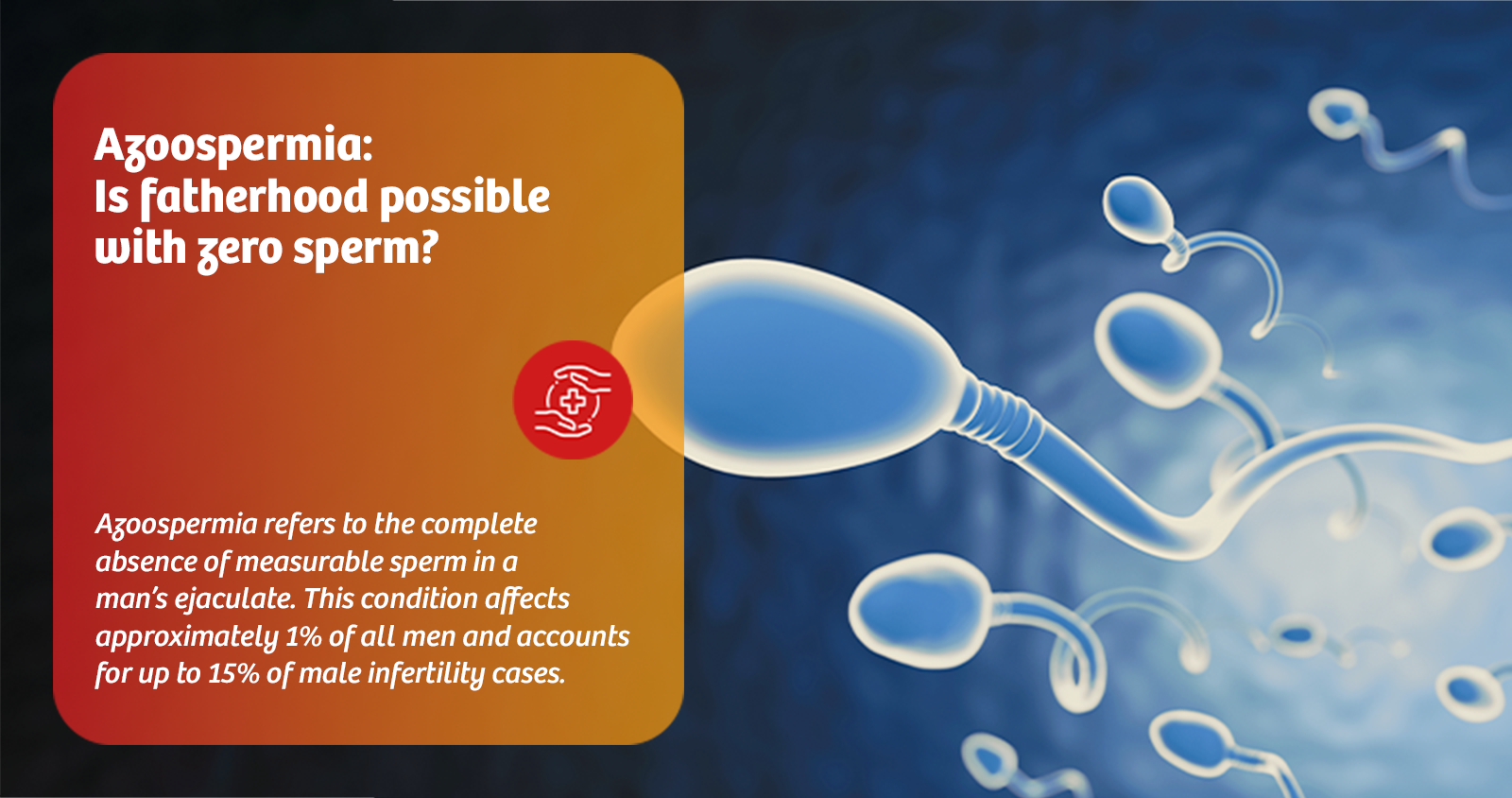
Azoospermia refers to the complete absence of measurable sperm in a man’s ejaculate. This condition affects approximately 1% of all men and accounts for up to 15% of male infertility cases. To treat azoospermia effectively, doctors must first identify the underlying cause. Medical professionals generally classify azoospermia into two main types: obstructive and non-obstructive.
Obstructive azoospermia occurs when sperm production in the testicles is normal, but a physical blockage prevents sperm from being released. It can be compared to a roadblock; the pathway exists, but sperm cannot reach their destination.
This type is often more straightforward to treat. Blockages may result from previous surgeries (such as a vasectomy), infections, trauma, or genetic conditions like congenital absence of the vas deferens.
Non-obstructive azoospermia occurs when there is a problem with sperm production itself. In this case, the reproductive tract is clear, but the testicles produce little to no sperm.
Causes include hormonal imbalances, genetic conditions, prior radiation therapy, or abnormalities in testicular development. Although more complex, treatment options are still available for many men.
A single semen analysis showing no sperm is usually only the first step. Since sperm counts can fluctuate, your doctor will typically repeat the test after a few weeks to confirm the diagnosis.
Once azoospermia is confirmed, a fertility specialist or urologist will carry out a detailed evaluation, including
Additional investigations, such as a testicular biopsy or ultrasound, may be performed to identify the exact cause.
A diagnosis of azoospermia does not mean you have no options. Treatment depends on whether the condition is obstructive or non-obstructive.
1. Corrective surgery
If a blockage is present, microsurgical procedures may restore sperm flow. For men who have undergone a vasectomy, reversal surgery can be highly effective, allowing natural conception in some cases.
2. Surgical sperm retrieval
If blockage correction is not possible, or in cases of non-obstructive azoospermia, sperm can often be retrieved directly from the testicles or epididymis through minor surgical procedures.
Advanced techniques such as Micro-TESE (microsurgical testicular sperm extraction) enable surgeons to locate small areas of sperm production within the testicular tissue.
3. Assisted reproductive techniques (IVF and ICSI)
Surgically retrieved sperm are usually limited in number and motility and therefore unsuitable for standard insemination. Instead, they are used in conjunction with in vitro fertilisation (IVF) and a specialised technique known as Intracytoplasmic Sperm Injection (ICSI).
During ICSI, a single healthy sperm is injected directly into the partner’s egg in a laboratory setting. This bypasses the need for the sperm to move independently. If fertilisation is successful, the resulting embryo is transferred to the uterus.
ICSI has revolutionised the treatment of male infertility, making biological fatherhood possible even in cases of extremely low sperm availability.
Can azoospermia be completely cured?
This depends on the cause. Obstructive azoospermia due to a reversible blockage can often be corrected surgically. Hormonal causes may respond to medication. Genetic causes are usually not curable, but assisted reproductive techniques can still help achieve pregnancy.
Are there natural treatments for a zero sperm count?
Lifestyle changes can improve overall health, but rarely reverse true azoospermia. Quitting smoking, maintaining a healthy diet, and avoiding excessive heat can support reproductive health. However, medical treatment is typically necessary.
What if no sperm can be retrieved?
If no viable sperm are found, alternative options include sperm donation or adoption. A fertility counsellor can help guide couples through these decisions.
A diagnosis of azoospermia can take time to process. It is important to allow yourself and your partner space to understand and cope with the emotions involved.
The next step is to consult a urologist specialising in male infertility. Bring your medical records, prepare your questions, and seek care at a centre experienced in advanced sperm retrieval techniques and ICSI.
While the path to fatherhood may involve additional medical support, modern science offers real hope. With the right guidance and treatment, the possibility of building your family remains very much within reach.
