


By Dr Snehal Patel
Consultant Paediatrics & Neonatology
June 09, 2026
When a child frequently complains of stomach pain, parents often assume it is due to indigestion, food intolerance, or a stomach infection. However, in some cases, recurring abdominal pain may be caused by a condition known as abdominal migraine. Although less familiar than traditional migraine headaches, abdominal migraine is a recognised medical condition that primarily affects children and can significantly impact their daily lives.
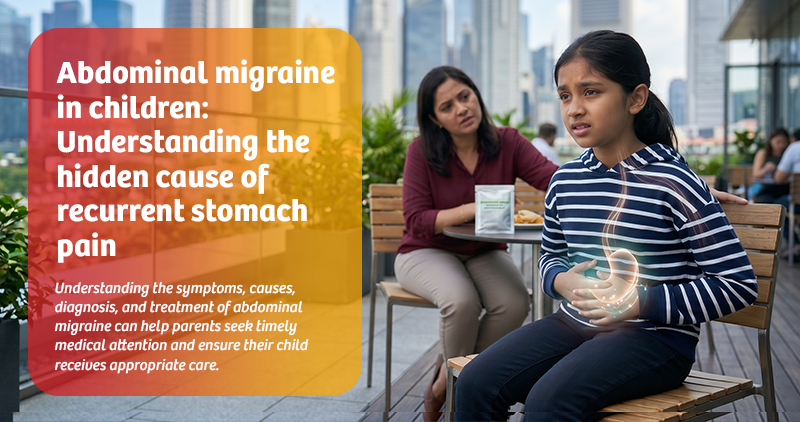
Understanding the symptoms, causes, diagnosis, and treatment of abdominal migraine can help parents seek timely medical attention and ensure their child receives appropriate care.
Abdominal migraine is a functional gastrointestinal disorder characterised by recurrent episodes of moderate to severe abdominal pain. Unlike typical migraines, where headache is the main symptom, abdominal migraine causes pain in the stomach area, usually around the belly button.
The condition most commonly affects children between the ages of 3 and 10 years, although it can occur in older children and adolescents as well. Many children who experience abdominal migraine eventually develop traditional migraine headaches later in life.
Episodes can be distressing for both children and parents because the child may appear completely healthy between attacks, making the condition difficult to recognise.
Abdominal migraine is relatively uncommon but not rare. Studies suggest that it affects approximately 1% to 4% of school-aged children. It is more commonly seen in children who have a personal or family history of migraine headaches.
The condition tends to be diagnosed more frequently in girls than in boys and often begins during early childhood.
The exact cause of abdominal migraine is not fully understood. However, experts believe it results from abnormal communication between the brain and the digestive system, often referred to as the "brain-gut axis."
Several factors may contribute to the development of abdominal migraine, including
Researchers believe that abdominal migraine and traditional migraine headaches share similar underlying mechanisms.
The hallmark symptom of abdominal migraine is recurrent abdominal pain. The pain is usually
In addition to abdominal pain, children may experience
Interestingly, a headache may not occur during an episode of abdominal pain.
Symptoms typically occur in episodes, with the child feeling completely normal between attacks.
Abdominal migraine episodes can last anywhere from:
Most attacks last several hours before resolving completely.
The frequency of episodes varies from child to child. Some children may experience attacks every few weeks, while others may have only a few episodes per year.
Certain factors may trigger an episode in susceptible children. Common triggers include:
Identifying and avoiding triggers can help reduce the frequency of attacks.
When should parents suspect abdominal migraine?
Parents should consider the possibility of abdominal migraine if their child
Because many other conditions can cause stomach pain, a proper medical evaluation is essential.
How is abdominal migraine diagnosed?
There is no single laboratory test or scan that confirms abdominal migraine.
Diagnosis is primarily based on
Doctors may perform certain investigations to rule out other conditions, such as
The diagnosis is usually made when recurrent abdominal pain occurs in a typical pattern, and no other medical cause is identified.
Conditions that can mimic abdominal migraine
Several disorders may present with similar symptoms, including
It is why medical evaluation is important before concluding that a child has abdominal migraine.
Treatment focuses on reducing symptoms, preventing attacks, and improving the child’s quality of life.
Management may include
Many children feel better after sleeping during an episode.
If attacks occur frequently, preventive strategies may be recommended.
These include
In some cases, doctors may prescribe preventive medications similar to those used for migraine headaches.
While it may not always be possible to prevent abdominal migraine completely, several measures can help reduce the likelihood of attacks
Keeping a symptom diary can be particularly useful in identifying patterns and triggers.
The prognosis for children with abdominal migraine is generally excellent. Many children outgrow the condition during adolescence. However, a significant proportion may later develop classic migraine headaches as they get older.
With appropriate diagnosis, trigger management, and medical guidance, most children can lead healthy, active lives with minimal disruption to their daily activities.
Seek medical attention if your child experiences
Early evaluation helps rule out serious conditions and ensures appropriate treatment.
Abdominal migraine is an often-overlooked cause of recurrent stomach pain in children. Although the condition can be challenging to recognise, awareness of its characteristic symptoms can lead to earlier diagnosis and effective management. If your child experiences repeated episodes of unexplained abdominal pain, especially with nausea, vomiting, or a family history of migraines, consult a paediatrician for a thorough evaluation. With proper care and lifestyle adjustments, most children can successfully manage abdominal migraine and enjoy a normal, healthy childhood.
