


By By Dr Darshil Shah
Consultant Urology
May 06, 2026
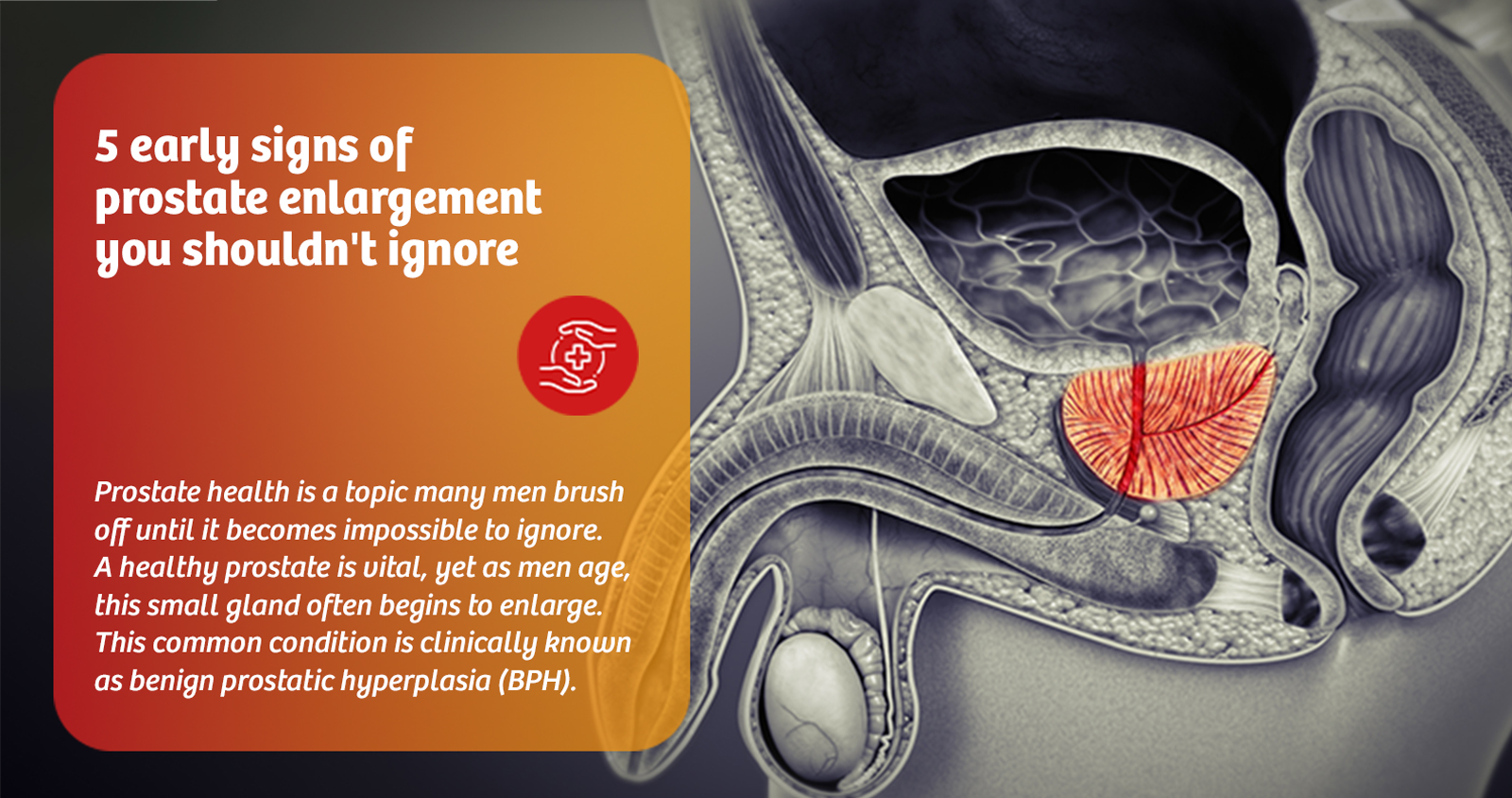
Prostate health is a topic many men brush off until it becomes impossible to ignore. A healthy prostate is vital, yet as men age, this small gland often begins to enlarge. This common condition is clinically known as benign prostatic hyperplasia (BPH).
While BPH is incredibly common and non-cancerous, it can severely disrupt daily life if left unchecked. Many men experience early symptoms but dismiss them as a normal part of ageing. They may joke about frequent trips to the bathroom, attribute poor sleep to stress, or quietly endure the physical discomfort.
Catching prostate enlargement early makes a massive difference in treatment options and overall well-being. By recognising the subtle changes in your bathroom habits, you can take control of your health before the symptoms escalate. Here are five early warning signs of prostate enlargement that men often overlook.
One of the most common early indicators of an enlarged prostate is a noticeable increase in bathroom trips. The prostate gland surrounds the urethra, the tube that carries urine out of the body. As the prostate grows, it squeezes the urethra. This pressure prevents the bladder from emptying, causing it to fill again much faster than before.
This symptom is particularly noticeable at night, a condition known as nocturia. Waking up once during the night might be normal, but if you find yourself getting out of bed two, three, or more times to use the restroom, your prostate might be the culprit. Chronic disrupted sleep can lead to severe fatigue and impact your daily energy levels.
A healthy urinary stream should be strong and steady. If your prostate is enlarged, the added pressure on the urethra acts like a clamp on a garden hose. The result is a noticeably weaker flow.
You also experience an interrupted urine stream that starts, stops, and starts again. Sometimes, men notice a delay in getting the flow started, even when the urge to go is strong. This hesitancy is a direct mechanical issue caused by the enlarged prostate blocking the normal exit route.
An irritable bladder is a frequent companion to an enlarged prostate. Because the bladder has to work significantly harder to push urine past the blockage, the muscular wall of the bladder can become thicker and overly sensitive.
This heightened sensitivity causes the bladder to contract even when it contains small amounts of urine. You will experience a sudden, intense urge to urinate that feels difficult or impossible to delay. This urgency can cause anxiety when travelling or sitting through long meetings.
After using the restroom, you should feel a sense of relief. If you step away from the toilet and immediately feel like you need to go again, you are likely dealing with urinary retention.
Because the enlarged prostate pinches the urethra, a small pool of urine often remains trapped inside the bladder. This lingering fluid keeps the nerves in your bladder activated, sending a continuous signal to your brain that you still need to urinate. Leaving urine in the bladder for long periods can eventually increase the risk of urinary tract infections.
Many men notice a small amount of urine leakage immediately after they finish going to the bathroom and zip up their pants. This post-urination dribbling occurs because the weakened bladder muscle struggles to expel the final few drops of urine completely through the compressed urethra.
Many men notice a small amount of urine leakage immediately after they finish going to the bathroom and zip up their pants. This post-urination dribbling occurs because the weakened bladder muscle struggles to expel the final few drops of urine completely through the compressed urethra.
At what age do men typically develop an enlarged prostate?
The prostate begins a second phase of growth when a man is in his mid-20s, but symptoms usually do not appear until after age 50. By the age of 60, nearly half of all men will experience some signs of BPH.
Does benign prostatic hyperplasia lead to prostate cancer?
No. BPH and prostate cancer are entirely separate conditions. Having an enlarged prostate does not increase your risk of developing prostate cancer. However, because the symptoms of both conditions can sometimes overlap, a proper medical evaluation is essential.
Can lifestyle changes help manage early BPH symptoms?
Yes. Reducing evening fluid intake, cutting back on caffeine and alcohol, and doing pelvic floor exercises can help manage early symptoms. A doctor can guide you toward the best routine for your specific situation.
Ignoring the early warning signs of an enlarged prostate will not make them go away. The condition naturally progresses over time, and ignoring the symptoms can eventually lead to complications like bladder stones, recurring infections, or complete urinary retention.
If you recognise any of the five signs listed above, schedule an appointment with your doctor or a urologist. A simple evaluation can confirm the diagnosis and open the door to highly effective treatments, ranging from basic lifestyle adjustments to specialised medications or minimally invasive procedures. Take action today to protect your long-term comfort and health.
